
Food and drink in Valencia: paella, rice dishes and more
Valencia’s cuisine is closely connected to its landscape: rice fields and lagoons around l’Albufera, vegetables from the Huerta, the Mediterranean coast and local markets all shape what people eat. Paella is the best-known dish, but it is far from the only one worth trying on a trip. This overview will help you understand typical dishes and make more informed choices at restaurants.
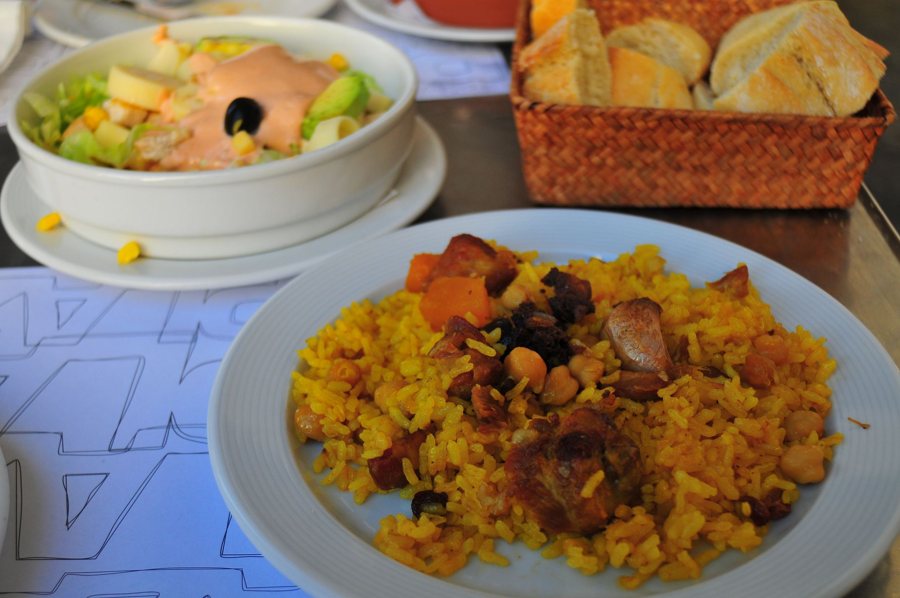 Reisgericht mit Fleisch und Kichererbsen, serviert mit Salat und Brot.
Photo: Alesia Belaya
Reisgericht mit Fleisch und Kichererbsen, serviert mit Salat und Brot.
Photo: Alesia Belaya
Paella valenciana: the original with chicken and rabbit
Traditional paella valenciana is made with rice, chicken, rabbit, green beans, large white beans (garrofó), tomato, olive oil and spices. Details can vary depending on the recipe and season. Saffron gives the rice its color and aroma. Unlike many versions familiar outside Spain, traditional Valencian paella does not automatically include seafood or chorizo.
Paella is cooked in a wide, shallow pan over heat. The rice should absorb the stock without being stirred constantly. A flavorful crust can form at the bottom of the pan, called socarrat—for many people, it is part of what makes the dish special. The pan is also called a paella, which is where the dish gets its name.
Menus also feature many other paella and rice dishes. These include seafood paella and arroz a banda, in which the rice is cooked in a rich fish stock. Arroz del senyoret is often served with peeled seafood. A baked rice dish cooked in the oven is called arroz al horno. Names and ingredients vary from restaurant to restaurant, so if you’re unsure, ask about the stock, meat, fish or seafood.
Rice dishes and fideuà on the coast
The region has far more to offer than one supposedly “authentic” paella. Rice dishes with fish and seafood are common in coastal towns, while inland you’ll also find hearty combinations with meat or vegetables. A close relative of paella is fideuà: short noodles are cooked in the pan instead of rice, usually with fish or seafood. It is often served with aioli.
If you’d like to order a rice dish, check the stated minimum number of servings and preparation time. Some kitchens make paella or fideuà only to order or for a minimum of two people, although this is not a universal rule. A quick call beforehand can save disappointment, especially outside the main mealtimes.
All i pebre: a dish from l’Albufera
All i pebre literally means “garlic and paprika” and refers to a spicy stew closely associated with the lagoon of l’Albufera, south of the city. It is often made with eel and potatoes. Since eel is not on every menu and recipes can vary, it’s worth asking about the ingredients and availability before ordering.
The area around l’Albufera is also known for its rice dishes and traditional inns. You can combine a visit with a boat trip or a walk. Timetables, opening hours and activities change with the seasons, so check them before you go.
Horchata and sweet treats
Horchata de chufa is a chilled, usually sweet drink made from tiger nuts (chufas). The nearby town of Alboraya, close to Valencia, is especially well known for growing them. It is often served with long, slightly sweet yeast pastries called fartons, which are dipped into the horchata. If you have any intolerances, ask to see the ingredients, as recipes and added ingredients can vary.
It’s also worth trying turrón, a sweet especially associated with the province of Alicante and the town of Xixona (Jijona)—particularly during the Christmas season. In Valencia, you’ll also find pastries and desserts made with pumpkin or almonds, depending on the season. Ask about regional products at markets and bakeries, and choose small portions to sample.
Mealtimes and dining out
Many restaurants serve lunch later than in Central Europe, with the main lunchtime sitting often falling in the early to mid-afternoon. Dinner also tends to start relatively late. There are exceptions in tourist areas, but elsewhere kitchens may close between mealtimes. Check current opening hours rather than relying on a fixed rule that applies across the country.
A menú del día is a set lunch menu that often includes several courses and a drink; each restaurant sets its own price and decides what is included. Ask what the menu includes and whether it is available on the day you plan to visit. It’s often a good idea to book for paella, fideuà or larger groups. Busy neighborhoods and weekends can get crowded.
How to find a dish to suit your taste
- For the classic combination of rice, chicken and rabbit, ask for paella valenciana.
- If you prefer seafood, say so and ask about a suitable rice dish or fideuà.
- For a hearty regional dish from l’Albufera, ask for all i pebre and have the ingredients confirmed.
- For a refreshing non-alcoholic drink, try horchata; it is traditionally served with fartons.
- If you have allergies, follow a vegetarian diet or have food intolerances, check directly with the restaurant about stocks, broths and possible cross-contact.
For a concise official guide to local cuisine and specialties, see Visit València – Gastronomy. If you’re staying on the coast, you can also find tips for Gandia. Menus, ingredients, prices and opening hours may change; always check the latest information from the establishment itself.
