
Discover Guadalest: Fortress History, Museums and Regional Cuisine
Accommodation in Guadalest
Guadalest combines an old town designated as a historical-artistic site with impressive evidence of the town’s history and unusual museums. At the same time, Guadalest overlooks a reservoir that supplies water to the comarca of La Marina Baixa. If you would like to combine culture, landscapes and regional specialities in one destination, you will find many concrete starting points here for planning your day.
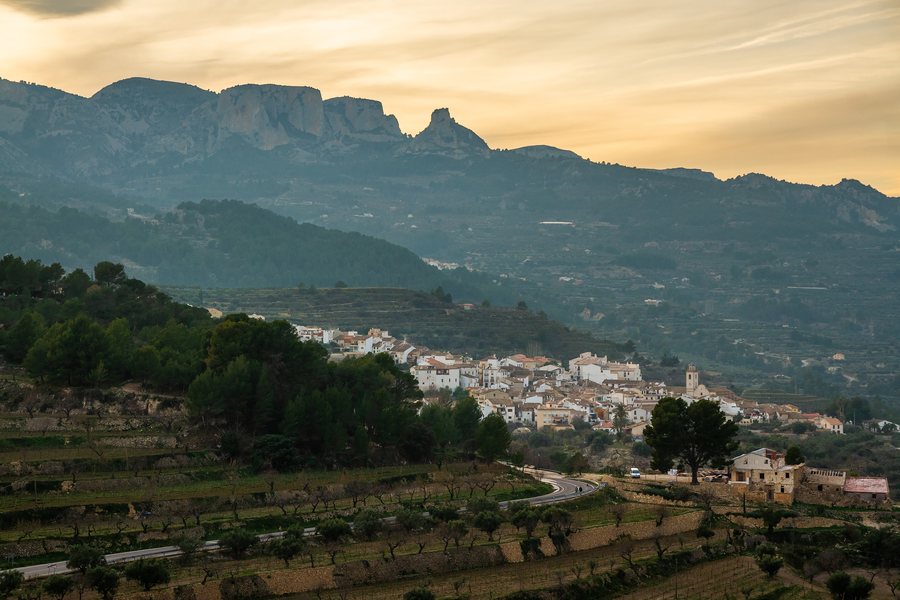 File:Benimantell village as seen from Castell de Guadalest in Alicante, Valencia, Spain, 2020 January.jpg
Photo: Ximonic (Simo Räsänen) via Source, CC BY-SA 4.0
File:Benimantell village as seen from Castell de Guadalest in Alicante, Valencia, Spain, 2020 January.jpg
Photo: Ximonic (Simo Räsänen) via Source, CC BY-SA 4.0
Fortress History and Historic Buildings
At the highest point of the municipality of El Castell de Guadalest stand the remains of Castillo de San José. Castillo de San José is an Arab fortress dating from the 11th century. Following two earthquakes and a blast, only structural remains have survived. It is precisely this combination of an exposed location and a eventful history that shapes Guadalest’s cultural character.
Casa Orduña also takes you into the town’s past. It was built in the 17th century by the Orduña family after the great earthquake of 1644. At the Iglesia Parroquial de Nuestra Señora de la Asunción, another historical layer can be traced: the present church was built between 1740 and 1753 on the site of a predecessor dating from the 13th century.
The Iglesia Parroquial de Nuestra Señora de la Asunción contains an ornate main altarpiece with ten paintings. The scenes depict events from the life of the Virgin Mary. In this way, the church adds a clearly recognisable example of religious art to the architectural history.
Museums with Special Collections
The Museo de Microminiaturas focuses on the tiniest formats: on display are the Statue of Liberty in the eye of a needle and Goya’s “The Third of May 1808”, painted on a grain of rice. This is an unusual cultural stop for you if, alongside fortresses and churches, you would also like to discover surprising subjects created with meticulous craftsmanship.
The Museo Etnológico Guadalest focuses on rural life in the past. It explains agricultural work, as well as the production of oil and the grinding of grain. Another collection includes around 140 motorcycles and several original microcars from the 1920s to the 1970s.
Regional Cuisine and Routes in the Surrounding Area
You can get to know local products at Miel Apícola Pérez, where you can taste honey and learn more about bees and honey. The Venta Guadalest restaurant offers traditional cuisine from the Valle de Guadalest and products from the region (km 0). This means that regional flavours join history and museums among the factors to consider when choosing where to visit.
The area around El Castell de Guadalest offers routes for hiking, cycling and climbing. If you would like to supplement your stay with outdoor activities, you can consider these options alongside the cultural attractions. Guadalest is therefore suitable for travel planning that balances historical sightseeing, museum visits, regional cuisine and active experiences.
Discover More Places
Further destinations in the surrounding travel area: Pinoso, Santa Clara, Calpe, Beniarrés, Benimantell, El Tossal, Albatera and La Carroja.
To the overarching travel overview: Alicante.

