
Discover Montesa: Castle, History and Nature
Accommodation in Montesa
Montesa: Castle, History and Nature
Montesa combines architectural and ecclesiastical history with landscapes where gorges, Mediterranean vegetation and the Cànyoles River come together. The castle-monastery makes Montesa the principal town and spiritual center of an order. The castle-monastery serves as the cultural focal point, while La Mola and the Barranc de la Fosch represent different landscape areas of the town.
 File:Montesa, 46692, Valencia, Spain - panoramio.jpg
Photo: Alex Navarro via Wikimedia Commons, CC BY 3.0
File:Montesa, 46692, Valencia, Spain - panoramio.jpg
Photo: Alex Navarro via Wikimedia Commons, CC BY 3.0
Castle and Museu Parroquial
Montesa Castle can be visited on Saturdays, Sundays and public holidays, and guided tours are available. Those planning this visit can schedule the cultural outing for one of these weekdays or public holidays. The guided tours additionally provide an accompanied setting for the visit, while the days of the week limit the possible visit planning.
For more than 30 years, the Museu Parroquial de Montesa has had a permanent museographic collection recognized by the Generalitat Valenciana. On the ground floor, the museum mainly displays architectural elements from the castle. Visits must be arranged through the Montesa Tourist Office.
Ecclesiastical Testimonies with Precise Dates
An altarpiece dedicated to Saint Sebastian was created by Gaspar Requena in 1559 and comes from the San Sebastián Hermitage. An organ made by Martín Usarralde in 1744 was restored in 2001. The foundation stone for the new church building was laid on February 19, 1693; construction work was completed in 1702. For the organ, 1744 refers to its creation and 2001 to its restoration; for the church building, 1693 marks the laying of the foundation stone and 1702 the completion of the work.
La Mola and the Barranc de la Fosch
La Mola is a rocky plateau near the castle, offering views across the entire Montesa valley. Parts of La Mola are used for climbing. The rocky plateau therefore provides a different setting from the gorge landscape of the Barranc de la Fosch. Only parts of the rocky plateau are used for climbing.
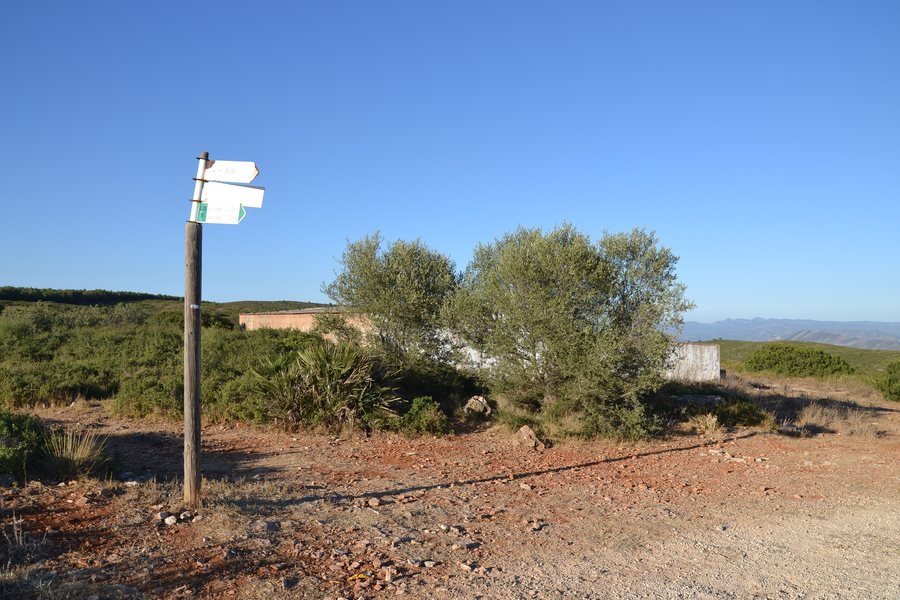
The Paraje Natural Municipal Barranc de la Fosch is a protected natural area in Montesa with gorges, Mediterranean vegetation and the Cànyoles River. The area has signposted trails. The Barranc provides a habitat for birds of prey, bats, reptiles, European pond turtles and the amphibian species known as the Iberian ribbed newt. The signposted trails are located within this protected natural area in Montesa.
Old Town and Hoguera de Sant Sebastià
A walk through the streets of Montesa’s old town can begin at Plaza de la Vila. Since then, Montesa has lit the traditional Hoguera de Sant Sebastià every year on the Saturday closest to January 20. The date therefore follows the Saturday near January 20, rather than a fixed date.
Discover Montesa According to Your Interests
When planning a cultural visit, the castle and Museu Parroquial differ mainly in their visiting conditions: the castle is limited to Saturdays, Sundays and public holidays and offers guided tours, while visits to the museum must be arranged through the Tourist Office.
Those interested in art history can look out for the names Gaspar Requena and Martín Usarralde, as well as the years 1559, 1744, 1693, 1702 and 2001, which are associated with the respective ecclesiastical works and the church building.
More places to discover: L'eliana, Catarroja, Estivella, Daimús, Rugat, San Antonio, Enguera, Favara
For the higher-level travel overview: Valencia.

