
Pego between natural landscapes, rice culture and cultural heritage
Accommodation in Pego
Pego between natural landscapes and cultural heritage
Pego brings together themes related to natural landscapes, agriculture and urban history. This gives you a journey with two clearly distinct focal points: the protected Marjal Pego-Oliva and the historic and cultural highlights in the town itself.
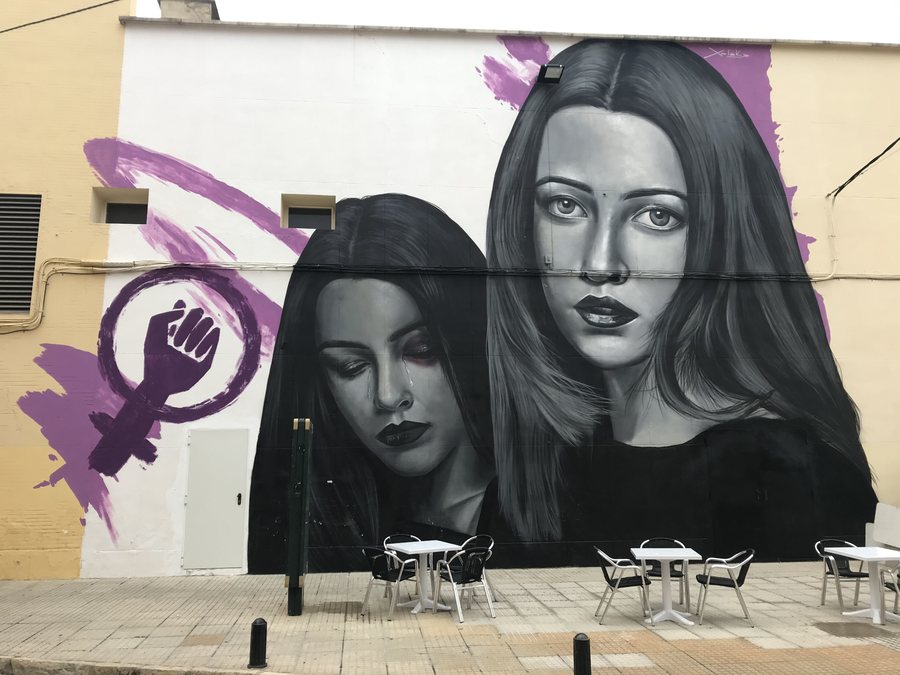 File:Mural-violencia-contra-dones-Pego-Valencia.jpg
Photo: Josep Lluís via Wikimedia Commons, CC BY-SA 4.0
File:Mural-violencia-contra-dones-Pego-Valencia.jpg
Photo: Josep Lluís via Wikimedia Commons, CC BY-SA 4.0
The protected Marjal Pego-Oliva natural landscape lies between the provinces of Alicante and Valencia. Its western half belongs to Pego in Alicante, while the eastern half belongs to Oliva in Valencia. The area includes dunes, malladas, rivers and land used for agriculture. The Marjal de Pego-Oliva Natural Park is also a wetland and dune system whose ecosystem is fed and sustained by the Bullent-Vedat and Racons-Molinell rivers and the Mostalla and Segària aquifers.
From Muntanyeta Verda, you can enjoy panoramic views of the rice fields, the Sierra de Segaria and Montgó.
Historic traces in the town centre
At Ambra Castle, archaeological research dates its construction to the beginning of the 13th century; its remains lie on a rocky ridge 264 metres above sea level. Pego’s urban heritage route is signposted with 13 multilingual information panels in Valencian, Spanish, English, French and German, leading visitors to up to 13 historic sites in the town centre.
The Church of the Assumption in Pego dates from the late 16th century; its bell tower was added at the beginning of the 18th century. The Ecce Homo Chapel dates from 1759 and stands on the site of the former Hospital de Pobres. Portal de Sala is the only surviving one of Pego’s three medieval gates.
Museums with a regional focus
Pego’s Museum of Contemporary Art opened in 1991 with works that had received awards in the “Vila de Pego” painting competition. It also houses donations from “Los Amigos del Museo de Pego”, prominent artists and art galleries.
Pego’s Ethnological Museum focuses mainly on rice cultivation and marketing, as well as traditional crafts and orange growing. Rice cultivation and milling are presented through donated tools and historic photographs.
Festive culture and getting there
Moros i Cristians is a festival in Pego held every year at the end of June. It features Moorish and Christian comparsas, as well as an embajada depicting the Christian king’s entry into the Moorish castle.
When travelling from the north, take the Oliva–Pego exit from the A-7 motorway. After the toll area, head south on the N-332 national road to the other end of Oliva; there, the turn-off for Pego onto regional road 3318 is on the right.
If you choose a hotel or other accommodation in Pego, you can tailor the focus of your trip to nature, local history, museums or the festival programme. This allows you to choose your preferred base according to your interests and planned daily rhythm.
Find more destinations here: Casas del Señor, Banyeres De Mariola, Tibi, El Tossal, Altea, Alcoleja, Quatretondeta and Ibi.
For the higher-level travel overview: Alicante.

