
Siete Aguas between History, Springs and Nature
Accommodation in Siete Aguas
Siete Aguas combines traces of history with springs, ravines and natural areas. The tour through the historic centre covers more than 500 years of history and the former walled area of the town. There is also a themed hiking route to springs and surrounding natural sites, geological formations, and places where flora and fauna can be observed. Those looking for a hotel in Siete Aguas can choose where to stay based on these different interests.
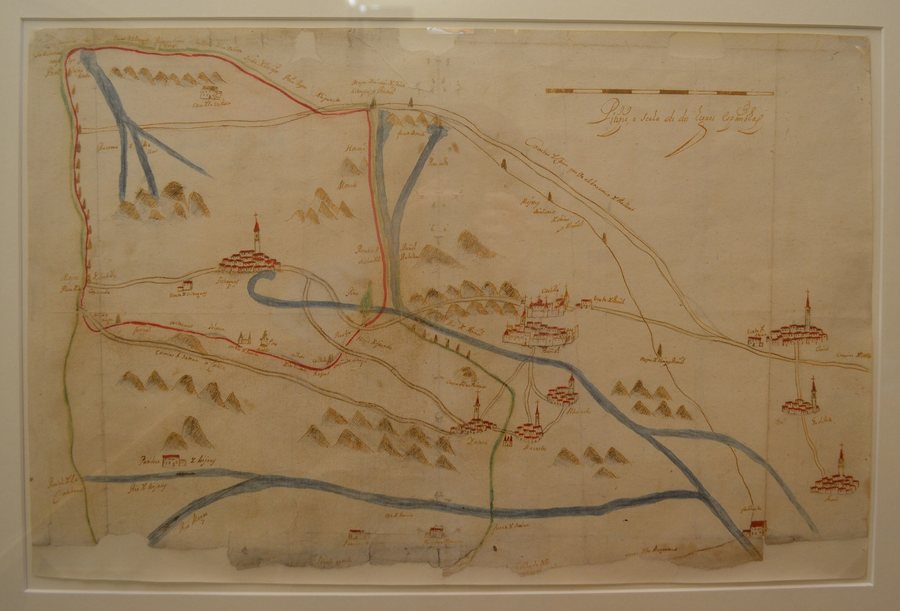 File:Mapa de 1721 de los términos de Siete Aguas, Buñol, Chiva y Macastre - Archivo Reino de Valencia.jpg
Photo: Dorieo via Source, CC BY-SA 3.0
File:Mapa de 1721 de los términos de Siete Aguas, Buñol, Chiva y Macastre - Archivo Reino de Valencia.jpg
Photo: Dorieo via Source, CC BY-SA 3.0
History preserved in the townscape
The Permanent Archaeological and Historical Collection of Siete Aguas includes palaeontological material from the Secondary Era to the Quaternary, as well as cultural artefacts from the Neolithic, Bronze Age, Iberian and Roman periods. Educational panels explain the different periods. The museum also displays fossils, Iberian inscriptions, old machinery and archaeological treasures.
The present-day Church of San Juan Bautista is a Baroque religious building whose construction began in 1780. Its main altarpiece was reconstructed from photographs of the original from the early 18th century and put back in place on 25 June 2008. La Cruz Pairal is a cross in the Late Gothic Flamboyant style dating from the 15th century. Until 1851, it symbolised the boundary between the former kingdoms of Castile and Valencia.
The Puente Real y Concejil over the Río Suc has a single semicircular arch and spans a height of 10 metres. It is evidence of an ensemble along the Camino de Requena, later known as the Camino Real, that has largely disappeared or been substantially altered.
Springs, riverbanks and geological formations
Fuente de la Tejería is a natural area with a lake where the flora and fauna of mountain river landscapes can be observed. Fuente La Vallesa is a recreational area with beautiful views, plenty of shade, a spring, tables and barbecue facilities; it is easy to reach by car. Riverside plants such as willows, boxwood, hawthorn and ground-cover plants from river meadows grow in the El Papán area.
The Barranco del Papán contains interesting knife-like geological formations that are suitable for photography. In the Barranco de Malén, rock layers containing dinosaur remains and fossilised trees can be seen. It is also home to a breeding area for Bonelli's eagle and a small genet colony. Rock paintings, as well as settlements from the Bronze Age and Iberian periods, can be found in several places.
Plan a trip with different areas of focus
Siete Aguas can be reached via the A-3 motorway. Regular bus services run from Valencia bus station and from Requena; the C-3 Valencia–Utiel–Cuenca–Madrid railway line also stops there. For groups of more than 10 people, the municipality organises guided tours of the springs route in Spanish and Valencian upon prior request.
La Balsa de los Patos is a pond that was formerly used for water storage and, above all, for the adjacent washhouse. The first facility, dating from the 12th century, is considered to have been built by the Arabs; ducks can be seen there today. Together with the historic buildings, spring areas and ravines, it offers a broad range of attractions for stays in which you wish to combine culture, landscapes and nature observation.
More places for regional orientation
For more ideas of places to visit, discover San Rafael Del Río, Puçol, Palma de Gandía, Alaquas, Benifairó De La Valldigna, L'olleria, Museros and Daimús.
For the broader travel overview: Valencia.

