
Palau Ducal dels Borja in Gandia: Plan your palace visit
The Palau Ducal dels Borja is one of Gandia’s best-known historic buildings. For centuries, the palace was associated with the Borja (Borgia) family, and its story reflects the city’s development from the Middle Ages to the modern era. A visit is about more than individual works of art: the rooms, courtyards, ceilings and wall decorations show how the palace changed over time.
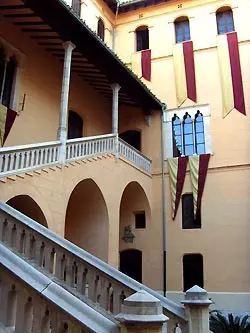 Der Palau Ducal dels Borja - Gandia
Photo: M.Lenk
Der Palau Ducal dels Borja - Gandia
Photo: M.Lenk
The history of the Borja family
The palace dates back to medieval Gandia. In the 15th century, it became the property of the Borja family, whose members played an important role in European church and political history. One figure with particularly close ties to Gandia is Francis Borgia, the fourth Duke of Gandia. He later became a Jesuit and was canonised in 1671. The palace therefore offers a glimpse both into the history of an aristocratic residence and the life of a figure whose influence reached far beyond the region.
The building is not a single, unified structure from one period. Renovations and extensions brought together a variety of styles. A guided tour or audio guide can help you make sense of the rooms and their stories. This makes it clear why the palace is interesting not only for its furnishings, but also as a historic site.
Rooms and special features
One of the most impressive areas is the Galeria Daurada (Golden Gallery), a series of rooms with decorative tiles and elaborate ceilings. It was created in the early 18th century in connection with the veneration of Saint Francis Borgia. As you walk through, look out for the different motifs and how the design continues from one room to the next.
Other halls and chapels feature wooden ceilings, murals and religious art. The rooms open to visitors may change due to restoration work or events. The official visitor information sometimes notes that certain areas are closed, so check which parts of the palace will be open on your chosen date before you travel.
Planning your visit
The palace is in Gandia’s old town at Carrer del Duc Alfons el Vell 1. Plan your visit as part of a day in the historic centre, and allow extra time for getting there and finding your way around. Depending on what is available, you can use an audio guide for the interiors or join a guided tour. Availability, languages, admission prices and opening times can change, so check directly with the palace for your chosen date.
Information about admission and visiting options is available on the official Palau Ducal visitor website. Book a guided tour in advance if you want to visit at a particular time. An audio-guide visit lets you spend longer in individual rooms; follow the instructions on site and only take photographs if permitted.
You can reach Gandia from Valencia by public transport or car. From the railway station or local stops, follow the route towards the centre; check current connections and the remaining distance to the palace before setting off. In summer, water, sun protection and comfortable shoes are useful, as getting around the city and visiting historic interiors together can take longer than expected.
How to combine your visit
The palace fits in well with a walk through Gandia’s historic centre. Take time to explore the squares and lanes around the building, and plan a break at a café or restaurant. If you are interested in the region’s history, you could also visit the city’s museums or other historic sites. Opening hours and access may vary by season and depending on events.
If you are mainly interested in the architecture, focus on the interiors and their details. History enthusiasts will get more out of a guided tour, which connects the Borja family’s story with the palace’s different construction phases. For a relaxed visit, avoid scheduling too many other activities immediately before or afterwards.
The Palau Ducal is a worthwhile stop for anyone who wants to discover Gandia as more than just a seaside resort. By checking in advance which rooms are open and what visiting options are available, you can easily fit a palace visit into a day in the city.
Planning your time in Gandia and the surrounding area
For more context on your visit to the palace, the Gandia overview offers further information about the old town, the beach and getting there. The palace is one of the cultural attractions of the Province of Valencia; the page on the Valencian Community provides a broader geographical overview. If you would like to visit other collections and exhibitions after the Borja Palace, take a look at the museum guide.
If you are staying overnight, location makes a difference: accommodation in Gandia is a better fit if you want to focus on the old town and palace, while the coastal area offers places to stay in Platja de Gandia. For another day on the coast, you could compare Gandia with neighbouring Oliva. If you would rather explore a historic inland town, Xàtiva is a good alternative; plan the journey and the time available separately.
