
Culture and architecture: Discover the Valencia region
A cultural and architectural journey through the Valencia region takes you across three very different provinces: from the streets, markets and buildings of the city of Valencia to the walled hilltop town of Morella and the historic landscapes and cities in the south. Rather than simply ticking off sights, it’s worth considering the history and present-day use of each building together: who built it, what it was used for, and how best to travel between places today?
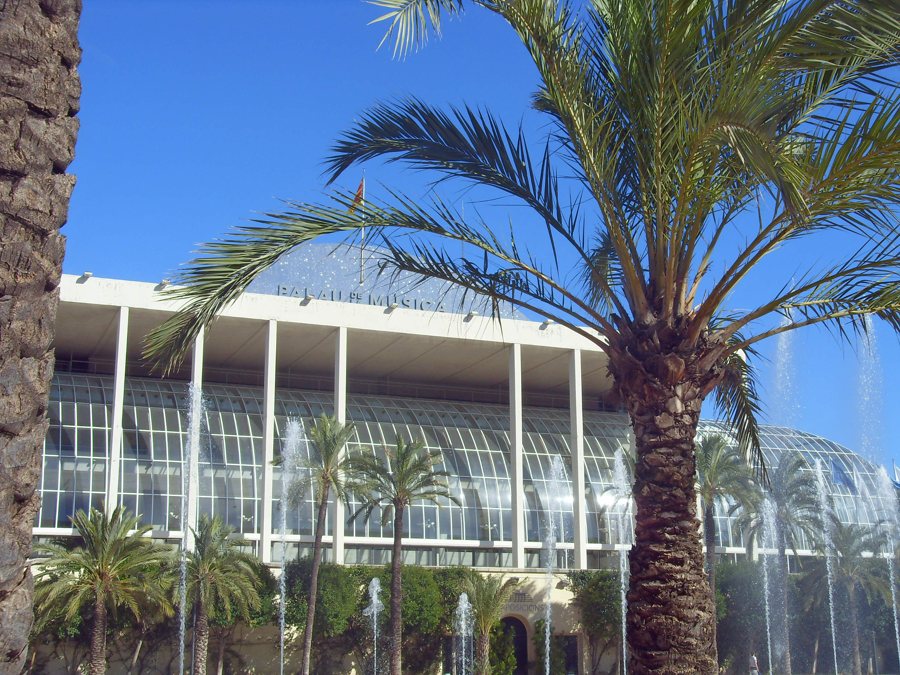 Der Palau de Música in Valencia, eingerahmt von Palmen und Wasserfontänen.
Photo: Markus Lenk
Der Palau de Música in Valencia, eingerahmt von Palmen und Wasserfontänen.
Photo: Markus Lenk
What kind of cultural trip is right for you?
If you prefer short distances, focus on Valencia city. Historic buildings and modern architecture are within easy reach of one another in well-connected neighbourhoods. If you’re looking for medieval townscapes and fortifications, you can include Morella and other inland destinations. In the south, Alicante and Elche add architecture, urban history and cultural landscapes to the mix. For a first trip, staying in two places is usually more practical than changing accommodation every day; for individual inland destinations, factor in travel time and the return journey.
A good day of sightseeing need not include more than two or three major stops. Opening hours, admission, guided tours, construction work and accessibility can change. Check the official information for each venue the day before your visit; when visiting religious buildings, be mindful of services and dress appropriately. For indoor visits, it’s worth checking admission times and booking a time slot in advance if available.
Valencia city: Gothic, Modernisme and contemporary architecture
In the historic old town, the cathedral, squares, sections of the old fortifications and the Silk Exchange, Lonja de la Seda, are all within walking distance. Built in the late 15th century as a centre of trade, the Lonja is an outstanding example of Valencian Gothic architecture. The grand columned hall, vaults and courtyard show how closely the history of trade is tied to architecture. Check current visiting hours and whether the interior will be open on the day you plan to visit.
Around the historic centre, the city’s evolution can be seen in its buildings from different eras: market halls, town houses and railway station architecture are all part of the cityscape, alongside modern cultural buildings. The Jardín del Turia, which runs along the former riverbed, provides a pleasant route between the old town and the City of Arts and Sciences. With its large, bright forms, this complex defines modern Valencia; it makes for an architectural walk in its own right, rather than a substitute for the historic neighbourhoods. If you want to visit museums or attend events, check opening hours, tickets and programmes separately.
For more information to help you find your way around, see our Valencia city guide. The province of Valencia also offers destinations beyond the capital, such as Xàtiva, with its historic skyline and castle complex.
For more historic buildings outside the capital, the city guides to Sagunt and Xàtiva make good additions: you can pair a look at the architecture in València with a dedicated trip into the province.
Castellón: city walls, castles and mountain towns
Morella is a particularly impressive destination in the north: the old town sits on a rocky ridge, the city walls trace the outline of the town, and the castle occupies its highest point. The streets and the Basilica of Santa María la Mayor bring different chapters of the town’s history to life. The terrain is not entirely level: cobblestones, slopes and steps are common. Sturdy shoes and a realistic schedule make the walk more enjoyable; if you have limited mobility, check access and individual interiors in advance.
Castelló de la Plana offers a different scale: squares, churches, museums and the maritime district of Grao can all be combined in a city walk. In Peñíscola, the castle and old town form a striking historic backdrop by the sea. These places can be busy, especially in peak season; an early start or a visit outside the midday hours can make for a more relaxed experience. For more regional information, see our pages on Castellón, Morella and Castelló de la Plana.
Alicante: layers of city history and cultural landscapes
In Alicante, historic areas meet more recent urban development. The Castillo de Santa Bárbara, above the city, helps you understand its position between the port, old town and coast. Check in advance which entrance is open and what transport options are available to reach the castle hill; the climb and visit can be more or less strenuous depending on the heat and your fitness. Churches, squares and museums in the city centre round out the walk.
Elche broadens the focus from individual buildings to a cultivated cultural landscape: the Palmeral de Elche brings together palm groves, gardens and a historic irrigation system. Take a walk that lets you notice not only the palms but also the irrigation channels and how the gardens are used. These areas are more than just a backdrop; they are part of a historic urban landscape. Public paths, garden opening hours and guided tours vary, so check the latest local information. If you travel farther into the southern hinterland, you can combine cultural sites with a day in Alicante. Our Alicante city guide will help you with the basics of planning.
An itinerary for three to five days
- Two days in Valencia: Spend one day exploring the old town, including the Lonja, cathedral and market area. On the second day, combine the Turia Gardens with the modern architecture of the City of Arts and Sciences. If you want to visit interiors, check tickets and opening hours separately.
- An extra day in Castellón: Set off early for Morella, allow time for the old town and castle, and leave room for breaks. Staying overnight makes the journey more relaxed than taking a long day trip from Valencia city.
- Two days in the south: Use Alicante as a base for the castle and old town. Spend another day in Elche to experience the palm grove and irrigation landscape from a different perspective. Check transport, walking distances and garden opening times in advance.
The order of your trip depends on how you arrive and how you travel. Cities are often easier to connect by train and bus than more remote destinations; a hire car can offer greater flexibility for mountain towns. Compare not only journey times but also transfers, parking options and the return journey in the evening.
Experience architecture mindfully
Look beyond the façades: vaults, stonework, courtyards, tiles, windows and a building’s relationship to its square often tell you more than a quick photo stop. In modern buildings, pay attention to light, materials and how the spaces are laid out. Only take photographs in museums and places of worship if permitted, and respect private residential areas. In busy old towns, keep entrances and narrow streets clear for residents.
A guided tour can be helpful if it focuses on a particular era, neighbourhood or collection. Ask about the language, group size, duration and accessibility options. If you’d rather explore on your own, download maps and ticket information to your mobile device in advance, and allow time for breaks. In summer, shaded routes and visits in the morning or late afternoon are often more comfortable.
Practical planning and frequently asked questions
How many days do I need?
Two to three full days is a good starting point for Valencia city. Add extra days for Morella, Alicante or Elche, given the distances involved. A week allows you to travel through all three provinces without rushing every day.
Is this route suitable for children?
Many squares and outdoor areas are easy to visit with children. Castles, stairs and uneven cobblestones can be tiring, so plan shorter sections, water breaks and, if needed, an alternative viewpoint.
How can I check opening hours and tickets?
Use the official website of the attraction or museum, and check again shortly before your visit. Public holidays, events and restoration work can affect access.
Which places showcase different architectural styles?
Valencia combines Gothic architecture, historic urban buildings and modern cultural centres. Morella is known for its striking medieval townscape, while Alicante and Elche add castle architecture and a historic cultural landscape to the trip.
What should I bear in mind about accessibility?
Old towns often have slopes, cobblestones and steps. Check directly with the venues about step-free entrances and lifts, and plan shorter routes in hot weather.
Where can I find reliable visitor information?
For the Lonja de la Seda, the official regional tourism portal has information about the building; you should also check with the relevant venue for current access details and visiting hours.
