
Cocentaina: History, Routes and Regional Culture
Accommodation in Cocentaina
The medieval city walls, historic religious buildings, museums and routes through the landscape shape Cocentaina in different ways. Between fortification history, regional culture and natural areas, you can discover the town through individual, clearly distinguishable stops.
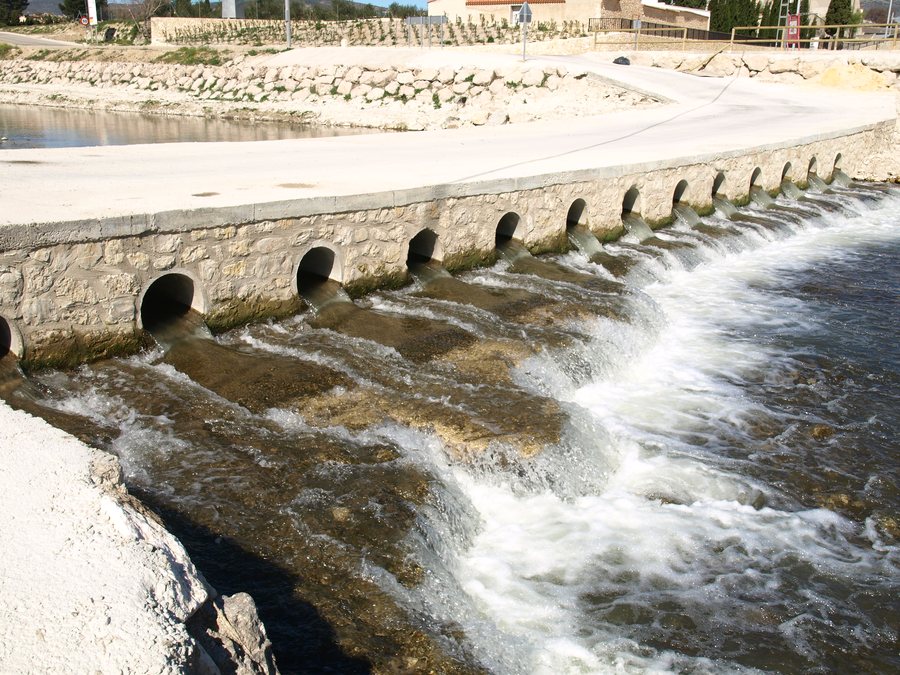 File:Cocentaina, Alicante, Spain - panoramio - Estroncio.jpg
Photo: Estroncio via Wikimedia Commons, CC BY-SA 3.0
File:Cocentaina, Alicante, Spain - panoramio - Estroncio.jpg
Photo: Estroncio via Wikimedia Commons, CC BY-SA 3.0
Traces of the Fortifications
Until the 18th century, the medieval city walls of Cocentaina had an irregular quadrilateral shape and extended over a perimeter of more than one kilometre. To the east and south, they were bounded by the natural ravines Barranc del Sord and Barranc de Santa Bàrbara. The Ruta de la Muralla de Cocentaina follows the former course of the fortifications and includes nine information panels, signposted markers along the route and references to the locations of former city gates.
Palaces, Towers and Routes
The Palau Comtal permanently displays works of art from the 14th to the 19th century, as well as archaeological remains found in the palace. Its first construction phase may date back to the late 13th or early 14th century. The Castillo de Cocentaina is a square, two-storey Gothic defensive tower built between the late 13th and early 14th centuries. The area of the Castillo de Cocentaina lies 765 metres above sea level. A path leads from the access road to a plateau at the foot of the tower; the tower can be reached via a path along the slope. The Castillo de Penella dates from the late 13th century and has a 15-metre-high main tower built onto the castle wall.
Historic Churches
The religious buildings also bear several layers of history. The Iglesia del Salvador was built at the end of the 16th century over a former mosque that was Christianised in 1530. Its single-nave layout is divided into four sections with chapels and follows Renaissance designs. The Iglesia de Santa Maria preserves archaeological remains near the main façade, as well as traces of an old cemetery outside the side façade. Elements of the Renaissance and Baroque periods come together in the surviving interior spaces of the Convento de los Franciscanos.
Museums and Regional Culture
The Museo Arqueológico del Comtat is housed in a building dating from the mid-13th century, which was remodelled in the 15th century and completely renovated in the 18th century in the style of a bourgeois house. The ethnological hall presents the traditional cultivation of wheat, olives and grapes, as well as the artisanal production of flour, oil and wine. The Casa Museo Festero displays festive clothing, a monographic exhibition on Gustavo Pascual, the composer of the pasodoble “Paquito el Chocolatero”, as well as bladed weapons from around the world and from different periods.
Nature and Cycling Routes
The Serra de Mariola Natural Park is shared by Cocentaina and other towns in the comarcas of l'Alcoià, El Comtat and Vall d'Albaida. The route to Paraje de Santa Bàrbara is short and easy to find from the town. A cycling route between Cocentaina and l'Alqueria d'Asnar passes through the settlement of l'Alcúdia de Cocentaina, which belongs to Cocentaina, before reaching l'Alqueria d'Asnar. This allows you to structure your planning around historic traces, the short route from the town and the surrounding natural areas.
More Destinations
La Nucia, Tormos, La Florida, L'Atzúbia, Jijona, Sax, La Romana and El Tosalet
To the higher-level travel overview: Alicante.

