
Pedreguer between mountain trails and architectural heritage
Accommodation in Pedreguer
Pedreguer between mountain trails and architectural heritage
The Mirador de Mirabarques stands on Monte Pedreguer. It is a structure made of a metal framework with a semicircular wooden platform. Since 1998, the viewpoint has offered sweeping views across large parts of the Marina.
 File:Interior de l'església de la santa Creu de Pedreguer, petxina.JPG
Photo: Joanbanjo via Wikimedia Commons, CC BY-SA 4.0
File:Interior de l'església de la santa Creu de Pedreguer, petxina.JPG
Photo: Joanbanjo via Wikimedia Commons, CC BY-SA 4.0
Mirador de Mirabarques on Monte Pedreguer
Sendero de Pedreguer and Muntanya Gran
The Sendero de Pedreguer PR-V53 runs through the mountainous part of Pedreguer and through the Sierra del Castillo de la Solana. The Sierra del Castillo de la Solana is also called Muntanya Gran. Numerous dry-stone terraces line the route. They are connected with the former cultivation of olives, almonds, carob and grapes in Pedreguer. The route therefore passes through a landscape where mountain trails and traces of former agriculture meet directly.
Routes by length and difficulty
The routes differ in length, duration and rating. The PR-V53 is rated as moderate to challenging. The route to Castillo del Ocaive is 10 km long, takes about three hours and is considered moderate to easy. Les Fonts de la Muntanya is connected to the PR-V53, is 5.2 km long, takes about two hours and is also rated as moderate to easy. A day of hiking can therefore be planned around about two or about three hours of walking, while the PR-V53 has a more challenging rating. Les Fonts de la Muntanya also offers views of Pedreguer and the sea.
Castillo del Ocaive and local history
The route to Castillo del Ocaive leads through the mountains and plain of Pedreguer. Along the way, the origins of the municipality in the Islamic period of the 12th and 13th centuries can be traced. At the summit of Castillo del Ocaive, the surviving architectural structures date from the Middle Ages, more precisely from the 13th and 14th centuries. The historical connection of the route thus extends from the origins of the municipality to the surviving structures at the summit.
Iglesia de la Santa Cruz in the town centre
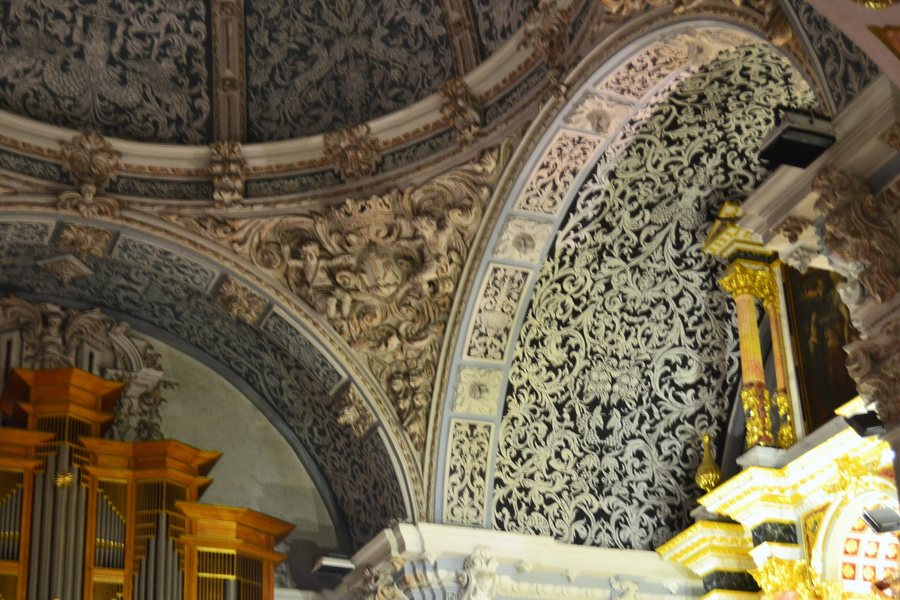
The Iglesia de la Santa Cruz stands in the town centre. It is Pedreguer’s most important historical and artistic monument, a Bien de Relevancia Local, and was built at the beginning of the 15th century. Inside, the church preserves one of the finest examples of decoration using the sgraffito technique.
Pedreguer is therefore home to sacred art and former flour production as distinct, tangible traces of the local past.
Molinets: mills and interiors
Another testament to the local past is the Molinets. The complex consists of two circular stone mills for flour production, built in 1850 and restored in 2016. Admission is free. The interiors can currently be visited by collecting the key from the local police or the cultural centre in exchange for depositing an identity document.
Other destinations: El Tossal, Onil, El Fondó De Les Neus, Abdet, Elda, Dolores, Beniarrés, San Miguel De Salinas
More information about Alicante.

