
Tabarca: Citadel, Coast and Protected Sea
Accommodation in Tabarca
Tabarca combines a walled citadel, distinctive coastal formations and a protected marine area. If you want to balance historic buildings, nature observation and time by the water, you will find clearly distinguishable travel interests here on one island.
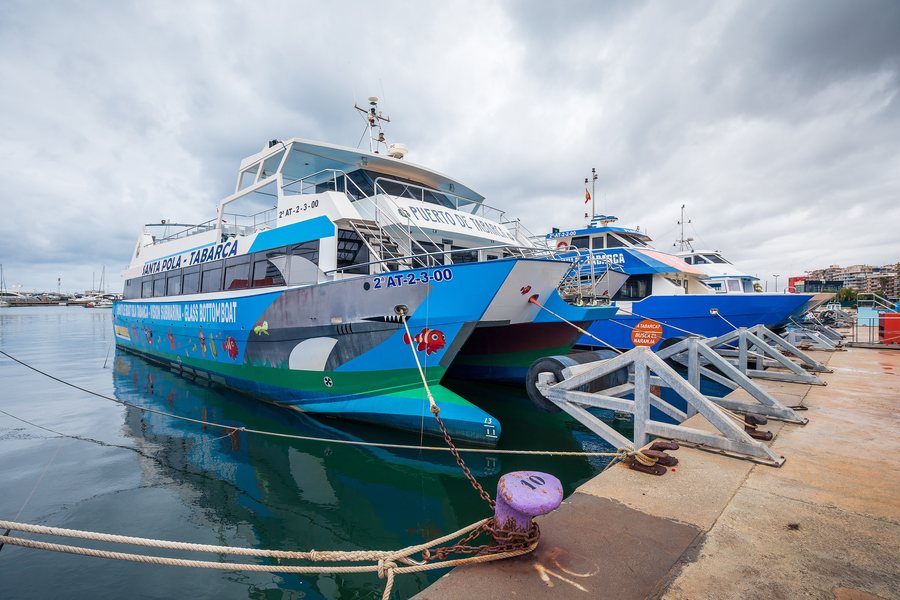 File:Santa Pola–Tabarca glass bottom boat in the port of Santa Pola, Alicante, Spain, 2022 January - 2.jpg
Photo: Ximonic (Simo Räsänen) via Source, CC BY-SA 4.0
File:Santa Pola–Tabarca glass bottom boat in the port of Santa Pola, Alicante, Spain, 2022 January - 2.jpg
Photo: Ximonic (Simo Räsänen) via Source, CC BY-SA 4.0
Archipelago and Coastal Formations
The Illa de Tabarca archipelago includes the smaller islands of La Cantera, La Galera and La Nao. The main island is approximately 1,800 metres long and up to 400 metres wide. The coast of Tabarca consists of small, low cliffs with pebble beaches at their foot. Tabarca’s only sandy beach is located on the isthmus. This creates a variety of landscapes side by side without the island losing its clear, manageable character.
Marine Reserve and Snorkelling
The seabed of the marine reserve ranges from 0 to 40 metres in depth and is home to well-preserved seagrass meadows of Posidonia oceanica. The Tabarquino Archipelago is designated as a Special Protection Area for birds (ZEPA). Snorkelling is possible in Tabarca’s clear waters. Those who focus on nature and water can encounter both a protected habitat beneath the sea surface and a specific experience in the water.
Fortress and Buildings of Nueva Tabarca
The walled and newly laid-out citadel of Nueva Tabarca was designed and built in the last third of the 18th century under the rule of Charles III. The fortified settlement of Nueva Tabarca has three entrance gates. The Iglesia de San Pedro y San Pablo has a rectangular floor plan and a single-nave layout. The buildings also include the Casa del Gobernador, with a two-storey main building and two attached wings, each with two storeys.
The former Almadraba warehouse has been documented as the site of the Nueva Tabarca Museum since May 2004. Together with the citadel, gates, church and Casa del Gobernador, this creates a cultural focus centred on specific architectural forms and buildings.
Festivals and Museums
The Fiestas in honour of San Pedro last no more than four days on the island of Tabarca and coincide with the patron saint’s feast day on 29 June. The Fiestas in honour of the Virgen del Carmen last no more than three days and coincide with the patron saint’s feast day on 16 July. The Museo de Isla Tabarca and the El Arco Hacia El Islote La Cantera Museum are also located in the immediate vicinity of Illa de Tabarca.
Other Places in the Surrounding Area
The area around Illa de Tabarca includes Castillo de Santa Pola, the Barco Museo Esteban Gonzalez museum in Santa Pola, and the Acuario Municipal de Santa Pola zoo. Platja de Tabarca beach is located in the immediate vicinity of Illa de Tabarca. The beaches in the area around Illa de Tabarca also include Calas de Santiago Bernabeu and Playa del Carabasí.
Route and Getting There
A route leads around Tabarca and offers views of the coastal landscape. Tabarca can be reached by boat from Alicante, Santa Pola or Benidorm; depending on the season, departures operate with varying degrees of regularity. The boat trip from Alicante harbour to Tabarca takes approximately one hour. The choice of departure harbour and the seasonally varying regularity of departures are therefore part of practical travel planning for the island destination.
More Destinations
Casas del Señor, Beneixama, Javea, Sant Vicent Del Raspeig, Ondara, Los Arenales Del Sol, Agost and Beniardá
For the higher-level travel overview: Alicante.

