
Aín: Springs, Gorges and History in the Sierra de Espadán
Accommodation in Aín
Aín lies in the heart of the Sierra de Espadán Natural Park. The town combines cool gorges, springs and traditional water facilities with a rich history. In addition to paths through valleys and mountains, there are historic houses and buildings.
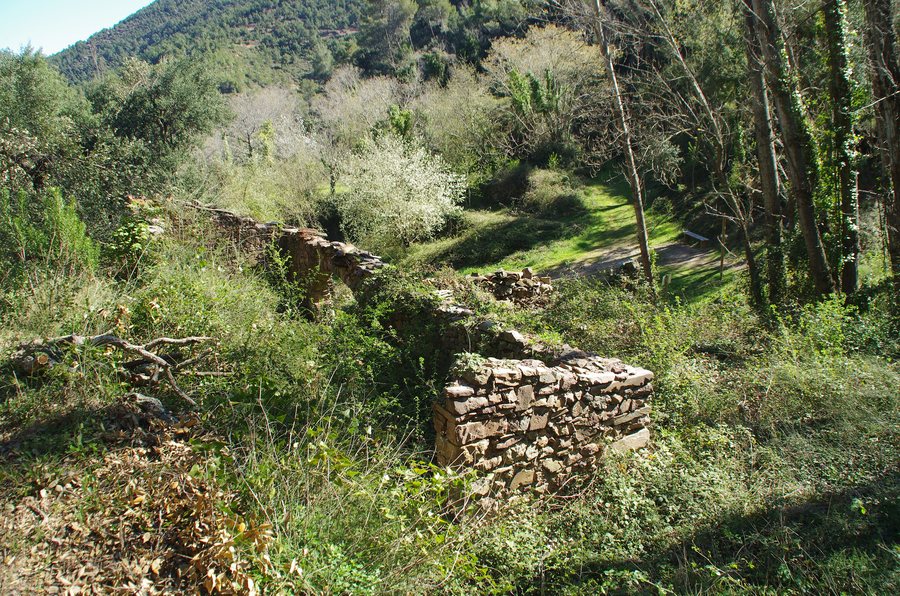 File:202103-K5 24963 - Aín - Barranco de la Caridad, Barranc de Roig - Casa de la Mina Mezquita (Baritina).jpg
Photo: Jrpuig via Source, CC BY-SA 4.0
File:202103-K5 24963 - Aín - Barranco de la Caridad, Barranc de Roig - Casa de la Mina Mezquita (Baritina).jpg
Photo: Jrpuig via Source, CC BY-SA 4.0
Springs, Gorges and Water Landscapes
The Font de l’Avellaner is located in a small gorge behind the Calvario. Cork oaks surround the peaceful spot, which invites visitors to sit and enjoy the lush, cool nature. At the Font de la Caritat, the spring cave is closed to the public. However, the channeling of its watercourse remains visible along the Barranc de la Caritat and through centuries-old irrigation channels. At the Barranc del Roig, the spring is surrounded by ferns, poplar groves and cork oaks in a shady landscape.
The Font Juncaret lies in a damp, cool passage after a walk through the gorge. Ferns and cork oaks characterize this spot, which is located away from the settlement. The Font Ereta is a traditional spring in the area: In the past, it supplied water to farmers in nearby field huts; today, it is used by animals such as wild boars. The Font Noguerals was channeled to irrigate fields; a nearby basin collected its water and distributed it to irrigated plots.
Beside the river on the outskirts of the town, the spring is located among centuries-old poplars and beneath a vault with a retable of the saint. The area has fire pits for cooking paella, tables and a small children's playground. The annual tradition of tasting the residents' various wines when the wine barrels are opened also continues there.
La Basseta is connected to a small irrigation basin that is still in use; its water emerges at two points only a few meters apart. Benches and a restored limestone quarry complement this site, which visitors can explore.
Historic Townscape and Fortifications
The Núcleo Histórico Tradicional de Aín is located on a hill. Traditional houses there retain carriage entrances as well as Cambra rooms on the upper floors. The Iglesia Parroquial de San Miguel dates from the 18th century. The Castillo de Aín is of Arab origin and was conquered by Christian troops in 1238. Its complex includes several walled defensive areas, cisterns, an auxiliary tower, a cylindrical Torre del Homenaje, an inner drawbridge and a moat.
The Castillo de Benalí is classified as a Bien de Interés Cultural.
Hiking, Cycling and Natural History
The Ruta 8: Aín-Pico Espadán passes through Aín and is classified as a route focused on sport and nature. In addition, hiking and cycling tours on paths through valleys and mountains can lead past dry-stone structures and historic trenches. There is a small children's playground at the Font de San Ambrós.
Other Places
For further destinations, you can also discover Nules, Altura, Montán, Argelita, Benicassim, Villahermosa Del Río, Castell De Cabres and Vall D'alba.
To the higher-level travel overview: Castellon.

.jpg)