
Peníscola between Fortress, Beach and Nature
Accommodation in Peníscola
Peníscola combines a city perched on a rocky outcrop with a distinctive fortress, maritime history and long beaches. The Castillo de Peñíscola was built in the 13th century by the Knights Templar. In the 15th century, it became the residence of Pope Benedict XIII during his exile; he is known as Papa Luna. If you visit the site independently, a free audio guide is available to download. The Museu de la Mar was restored in 1996 to preserve and display Peníscola’s maritime and cultural heritage. The Bufador also shapes the character of the town: the natural tunnel in the rock on which the city of Peníscola stands opens onto the sea.
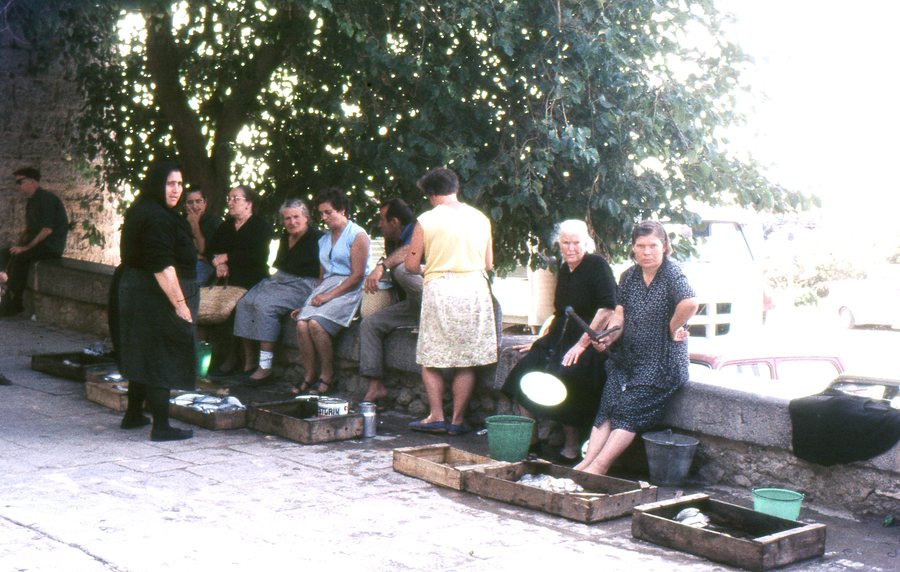 File:Peñíscola-Vente de la pêche du jour-1969.jpg
Photo: Daniel VILLAFRUELA via Wikimedia Commons, CC BY-SA 4.0
File:Peñíscola-Vente de la pêche du jour-1969.jpg
Photo: Daniel VILLAFRUELA via Wikimedia Commons, CC BY-SA 4.0
Historic Routes through the Old Town
The Capella de Santa Anna is one of the most distinctive chapels in the old town; every year on 26 July, a mass is held there in honour of Saint Anne. The Església parroquial de Santa Maria dates back to the 13th century, has a Romanesque portal and was rebuilt after a fire in the mid-14th century. The Portal de Sant Pere was built in 1411 on the orders of Benedict XIII as a new sea entrance to the fortified town and bears the coat of arms of Papa Luna. Until the 18th century, the Portal Fosc was the fortress’s only land entrance; its ramp is enclosed by Renaissance town walls built in the last quarter of the 16th century. The façade of the Casa de las Conchas, completely covered with shells, is considered a worthwhile stop for visitors to Peníscola.
Beaches with Different Highlights
Playa Norte is a five-kilometre-long beach with fine, golden sand and views of the Castillo del Papa Luna. A long seafront promenade with numerous restaurants runs along Playa Norte; a tourist train also operates there. Activities such as sailing, diving, windsurfing and canoeing are available at Playa Sur. The Faro de Peñíscola dates from 1892 in its present form; its light reaches 35 miles (65 km).
Nature Park, Coves and Trails
The Parque Natural de la Sierra de Irta is a protected landscape covering an area of 7,743 hectares and including a twelve-kilometre stretch of undeveloped coastline. Visitors should use the signposted routes and paths there and park in the designated areas. Prepared cycling routes are suitable for beginners and intermediate cyclists; there are also five circular hiking trails. The Parque Natural de la Serra d'Irta stretches for 15 kilometres along the southern coast of Peñíscola and includes 16 natural coves. At Pic Campanilles, the Serra d'Irta reaches an elevation of 572 metres; here, cliffs, coves and a species-rich marine ecosystem come together, largely protected by the marine reserve.
Wetland, Garden and Local Stories
Marjal de Peñíscola is a publicly accessible wetland that visitors can explore via wooden walkways. It is home to one of the last protected areas for the aquatic species Samaruc and Fartet. The Parque de Artillería now serves as a botanical garden with palms, olive trees, lavender and native flora from the Sierra de Irta nature park; from there, visitors can enjoy views of the Mediterranean and the fortress walls. The Peníscola de Cine tourism offering combines filming locations with local products to create a special visitor experience.
More Destinations for Planning Your Trip
More destinations for planning your trip: Xilxes, Moncófar, Sarratella, Chóvar, Vall D'alba, Caudiel, Artana
To the higher-level travel overview: Castellon.
More about the Destination
Relevant information for planning your trip:

