
Moncófar: Coast, Nature and Local History
Accommodation in Moncófar
Moncofa combines coast, protected natural areas, historical traces and regional cuisine in which rice dishes play an important role. As a result, the town is defined not only by its beaches, but also by its river mouth, agriculture, fishing history and paths through the landscape.
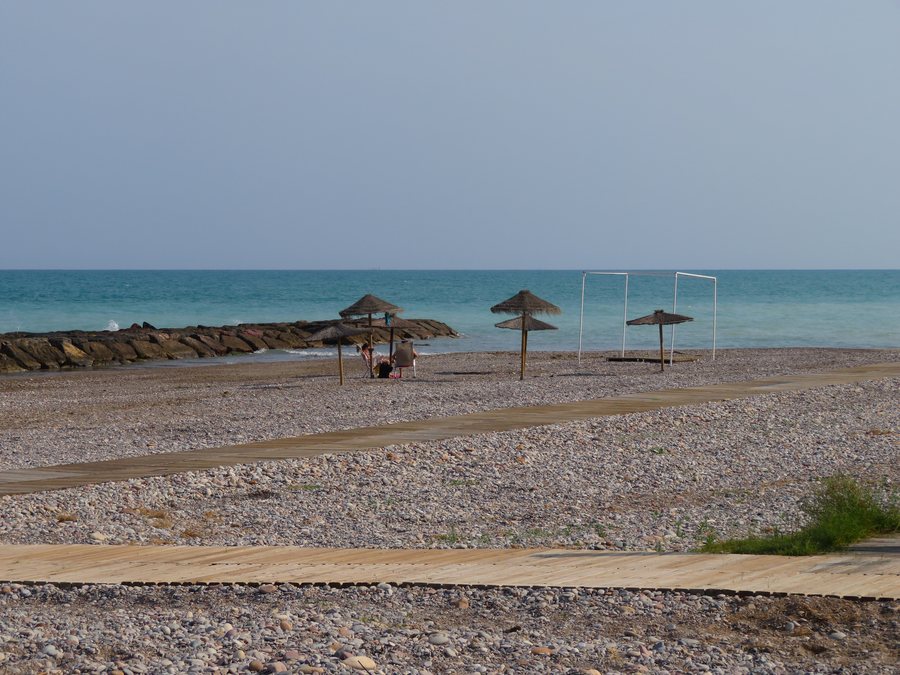 File:Playa de Beniesma, en el municipio de Moncófar, España.jpg
Photo: Juan Emilio Prades Bel via Wikimedia Commons, CC BY-SA 4.0
File:Playa de Beniesma, en el municipio de Moncófar, España.jpg
Photo: Juan Emilio Prades Bel via Wikimedia Commons, CC BY-SA 4.0
Six kilometres of coast with varied beach landscapes
Moncofa has six kilometres of coastline with the beaches of Pedraroja, Grau, Masbo, Belcaire, Beniesma and Estanyol. Playa Pedraroja is 550 metres long and has an accessible access point, lifeguard and rescue services, as well as sports courts.
Playa del Belcaire is a 500-metre-long dog beach in a dune landscape. It extends to the mouth of the Belcaire River and has an open nature interpretation centre. Playa Beniesma has a nudist section and preserves the remains of a historic watchtower from the 16th century. Playa Grau includes viewpoints; it belongs to the maritime villa of Moncofa, while the town's most traditional beach area was associated with fishing families.
Estuary, micro-reserves and rare habitats
The mouth of the Belcaire forms an estuary with native vegetation, opportunities for birdwatching and picnic areas. It is also home to a protected habitat of the European pond turtle. The Estanyol micro-reserve covers 1.3 hectares and is home to native and endemic plants. The 900-metre-long L'Estanyol beach has a flora micro-reserve and a protected, delimited habitat for the endangered Kentish plover.
Maritime history and insights into everyday life
The Museo de Historia y Etnología de Moncofa presents Moncofa's agricultural, fishing and traditional way of life through objects, tools and images from everyday life. The museum offers guided tours and activities for school groups. The Ermita de la Magdalena is an 18th-century sacred building with maritime and religious influences in the Grao, or seafaring quarter, of Moncofa, and was built over an Arab rábita.
The remains of the Torre Santa Isabel de Carrillo o Nova also refer to the history of the coast. They come from a watchtower that was built between 1613 and an unknown date in the middle of the 17th century.
Rice dishes and paths through the landscape
Moncofa's local cuisine combines seafood and produce from horticulture in rice dishes such as paella valenciana, arroz a banda, seafood paella and baked rice. The Jornades Gastronòmiques de l’Arròs i la Paella take place in September, presenting local rice dishes prepared in various ways.
The Sendero Azul del Belcaire is a four-kilometre coastal hiking trail that was recognised as a European Blue Trail in 2017 because of its ecological value. The EuroVelo 8 Mediterranean Route passes through Moncofa; the third stage in the Comunitat Valenciana covers 55 kilometres from Castelló to Sagunt. An extensive network of irrigation channels and wells also bears witness to the historic water heritage and is connected with local agriculture.
More places: Montán, Vilar De Canes, Palanques, Castellón De La Plana, Burriana, Figueroles, Almazora, Montanejos
For the higher-level travel overview: Castellon.

