
Sant Mateu between Valencian Gothic and Nature Trails
Accommodation in Sant Mateu
Sant Mateu brings together natural landscapes and cultural history. This creates a travel idea for you that combines outdoor activity with architecture, palaeontology and traces of the past. The connection stretches from the Paraje Natural Municipal Racó del Frare and its gorges to the Valencian Gothic of the Iglesia Arciprestal and the geological eras represented in the palaeontology collection.
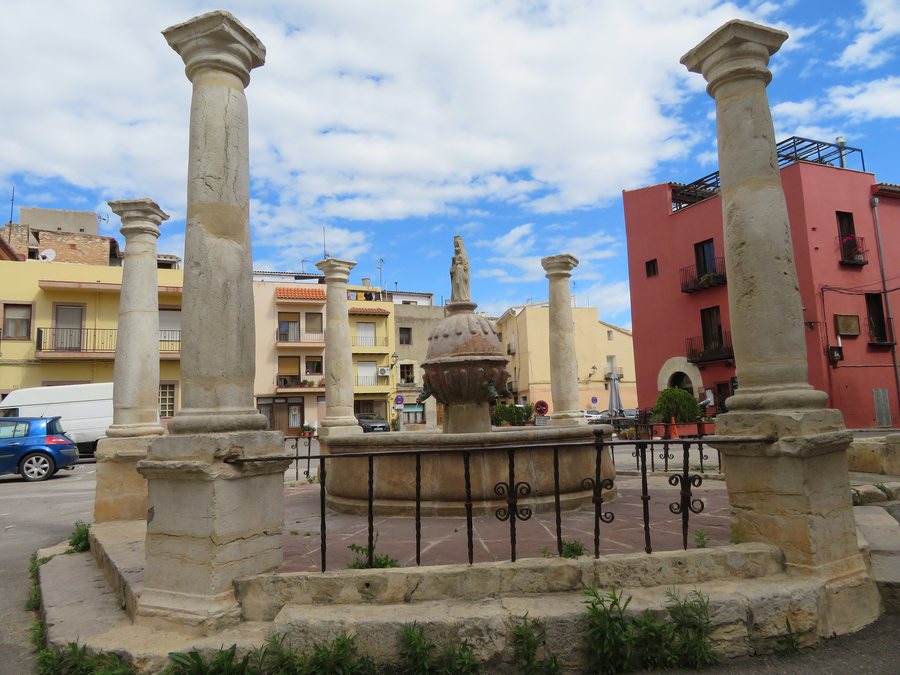 File:Fuente de la Virgen (Sant Mateu, Castellón, España).jpg
Photo: Juan Emilio Prades Bel via Wikimedia Commons, CC BY 4.0
File:Fuente de la Virgen (Sant Mateu, Castellón, España).jpg
Photo: Juan Emilio Prades Bel via Wikimedia Commons, CC BY 4.0
Natural landscapes and trails through the countryside
The Paraje Natural Municipal Racó del Frare occupies part of the municipality of Sant Mateu. It features a table-like geological structure with characteristic horizontally arranged plateaus and is of high ecological value due to its flora and fauna. Public hiking is possible there on the PRV-214 and its variants; the trails run through the Ratlla, La Rambleta and Barranc del Salt gorges. Those wishing to explore the natural area on foot can choose between the PRV-214 and its variants; the gorges mark the specific landscape sections along the route. If you would like to combine nature experiences with a specific hiking route, this provides a distinct focus for your stay.
The PR-CV 201 circular route begins on the old road to La Jana. In Roman times, its course coincided with the Via Augusta; the circular route also passes the ruins of the medieval watermill site of Moli Vell. The combination of a historic transport route and former water use gives the trail a cultural and historical character. The PR-CV 201 may therefore be particularly interesting for you if traces of the past are part of your interest in nature.
Discover historic Sant Mateu
The historic ensemble of Sant Mateu includes churches, civil buildings dating from the 13th to the 16th century, a medieval oven and fountains. It also features stone façades with Gothic and Renaissance windows. The Iglesia Arciprestal de Sant Mateu is an important monument of Valencian Gothic and was declared a national heritage site in 1931. For you, this means that the architectural history is not focused solely on one building: the ensemble brings together different periods and building functions within the history of the town.
In the Middle Ages, the Palacio del Marqués de Villores was the manor house of the Comí family. In the 16th century, its façade and entrance area were remodelled according to Renaissance architectural principles. At the Palacio, you can visit the façade and the ground floor. The Colección Museográfica de Paleontología Juan Cano Forner has a particularly impressive ammonite collection. A large proportion of the fossils on display is representative of the Maestrat; the collection also includes specimens from all geological eras and most stratigraphic units. In terms of its timespan, the collection extends beyond the buildings dating from the 13th to the 16th century. In the historic area, the Palacio, church façades and fossils therefore stand alongside one another as different subjects for visits.
Further places for orientation
Further places for your own orientation: Sarratella, Artana, Montanejos, Alcalà De Xivert, Moncófar, Pina De Montalgrao, Santa Magdalena De Pulpis, Segorbe.
For the overarching travel overview: Castellon.

.jpg)