
Buñol: Festival Culture, Castle District and Riverside Paths
Accommodation in Buñol
Buñol combines medieval history, a strong musical culture and paths through river and mountain landscapes. Added to this are the international renown of La Tomatina, family-oriented events and regional specialities. Depending on the type of trip, culture, nature, hiking and culinary impressions can be combined.
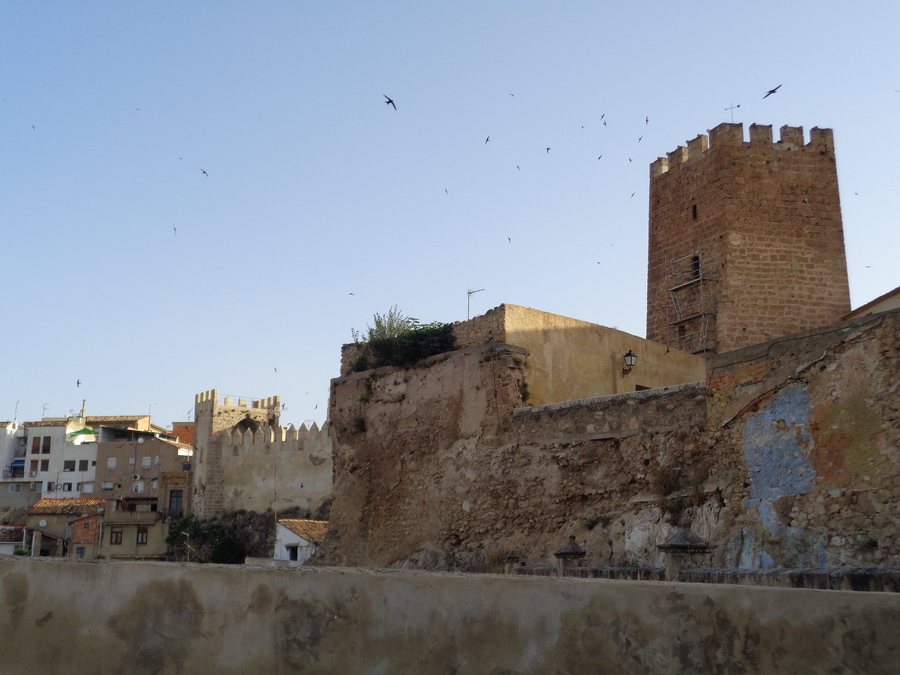 File:Buñol. Castillo. Desde la Torreta.jpg
Photo: Enrique Íñiguez Rodríguez ( Qoan ) via Wikimedia Commons, CC BY-SA 3.0
File:Buñol. Castillo. Desde la Torreta.jpg
Photo: Enrique Íñiguez Rodríguez ( Qoan ) via Wikimedia Commons, CC BY-SA 3.0
Fortress, Castle District and Paper History
The Castillo de Buñol is a medieval fortress with origins in the 11th or 12th century that was remodelled after the Christian conquest in the 14th century. According to visitor information, it is accessible every day of the year and at any time; admission is free. The castle district comprises narrow streets of Muslim origin leading to small whitewashed squares. The Gothic palace of the Castillo also offers a wine tasting by Bodega Viñas del Portillo featuring the white wine CAÑAS Y BARRO and the red wines ALBUFERA selección and ALBUFERA original.
The Molino de Galán is an example of pre-industrial heritage and symbolises the importance of the paper industry in Buñol. Its building dates from the first half of the 19th century; the renovated Molino houses a library, a conference room, exhibition spaces and sports facilities. A theatrical tour explores the history of paper production and the documents made there since the 18th century. The archaeological collection includes finds from the Palaeolithic, Neolithic, Iron and Bronze Ages, as well as remains of Iberian and Roman culture from Buñol and its surroundings. A cemetery that can still be visited today, with graves featuring Masonic symbolism, is also among the historical sites of interest.
La Tomatina and Music
The La Tomatina Museum is located in the Molino Galán. An immersive room with a 270-degree projection and photo panels presents the development of the festival; an app, augmented reality and virtual reality convey the festival experience to visitors. La Tomatina de Buñol was declared a Festival of International Tourist Interest by the Secretaría General de Turismo in 2002. The Bienal de Música de Buñol takes place every two years and ranges from classical music to jazz, soul, blues, folk, pop and rock, as well as courses and masterclasses. The De Par en Part festival opens artists’ homes to visitors and includes murals, exhibitions, workshops, talks, and competitions in design and visual arts.
A children’s event is intended for children aged 4 to 14 and is usually scheduled for the Saturday before the main event. A concert held annually on the last Sunday in August by the two local music societies, Sociedad Musical “La Artística” and Centro Instructivo Musical “La Armónica”, is recognised as a Festival of Regional Tourist Interest and additionally brings together invited wind bands from the region and other parts of Spain.
River, Springs and Hiking Trails
The Parque Fluvial is a riverside walking route along the bed of the Buñol River, whose banks have been restored and redesigned; at the same time, it has been affected by the consequences of the DANA. The Parque de San Luis contains the Ermita de San Luís Beltrán, remodelled in 1896, a spring and a bubbling water outlet. Cueva Turche is a geological formation with a lake and waterfall in a large rocky amphitheatre. In this natural area, crossing it reveals large formations of stalagmites and stalactites.
For shorter hiking plans, the 7.2-kilometre SLCV 166 Ruta del Agua is suitable as a circular route of moderate difficulty starting at the Parque de San Luis. The Ruta de la Música can be explored on foot and conveys Buñol’s musical heritage through information panels, signs and augmented reality. The permanent orienteering course in Parque El Planell uses control points, maps, posts or markers and a compass to try out and learn this sport. The Ruta de Las Fuentes passes through a large part of the municipality to most of the town’s fountains and scenic locations.
More demanding is the PRV 190 Las Moratillas: the 29.6-kilometre route leads from Buñol via the Sierra Malacara, Pico Nevera and Barranco Carcalín to Las Moratillas. The difficulty level is high, and the stated walking time is 7 hours 45 minutes. Another hiking route leads into the Barranco Carcalín, via Alto Jorge, El Dique, Corral de Cabras, the fossil beaches and the Puente Natural to La Jarra and the Buñol River; it is intended for experienced hikers on unpaved paths and uneven terrain. One section of the route is suitable for the whole family, while a more demanding section begins from the natural pools known as La Jarra.
Getting There and Regional Cuisine
Buñol is located on Renfe-Cercanías line C3 along the València–Buñol–Utiel route. Alternative bus services operate between Buñol and Utiel as a supplement to the service on line C3. Buñol is also the end of the second stage and the beginning of the third stage of a route running via Chiva, Buñol and Requena towards Cuenca. Mojete is considered Buñol’s signature dish; it is prepared with flour and meat or cod and is particularly associated with the night of La Tomatina.
Other Places in the Same Region
For further orientation, La Pobla De Farnals, Albaida, Burjassot, Beniatjar, Ontinyent, Loriguilla and La Barraca d'Aigües Vives are also worth considering.
For the higher-level travel overview: Valencia.
More About the Destination
Relevant information for planning your trip:

