
La Mata de Morella – Between Local History and Nature Trails
Accommodation in La Mata De Morella
La Mata de Morella combines a historic village centre with river landscapes, traditional crafts and diverse trails. The village lies at an altitude of over 820 metres and is surrounded by the Cantavieja and La Cuba rivers. This brings historic buildings, regional experiences and nature observation together within a compact thematic area.
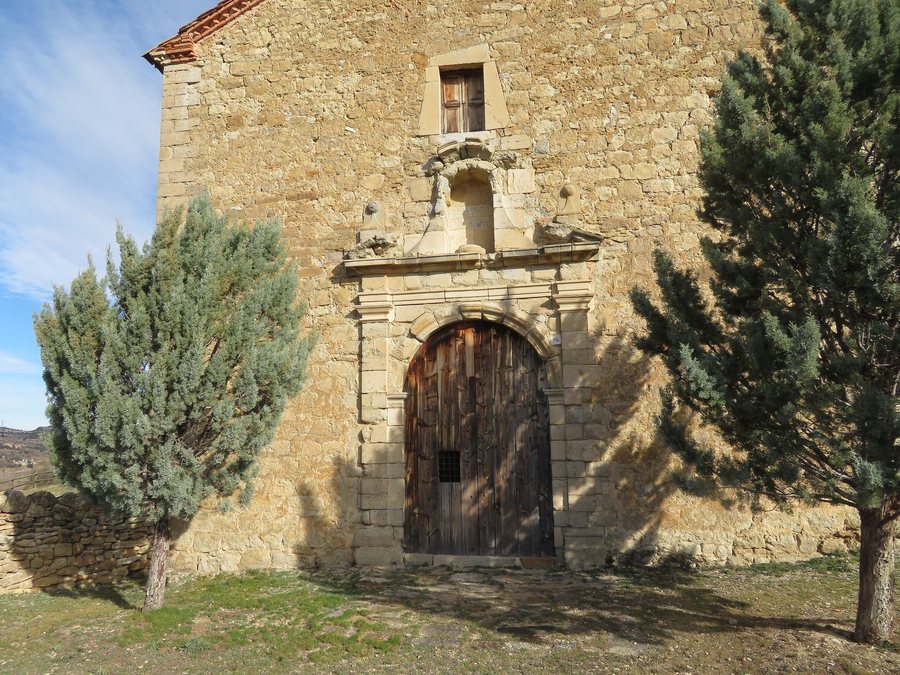 File:Ermita de Santa Bárbara de La Mata de Morella, comarca Els Ports, Castellón.jpg
Photo: Juan Emilio Prades Bel via Source, CC BY-SA 4.0
File:Ermita de Santa Bárbara de La Mata de Morella, comarca Els Ports, Castellón.jpg
Photo: Juan Emilio Prades Bel via Source, CC BY-SA 4.0
Historic Buildings in the Village Centre
In the historic centre stands La Nevera, a building dating from the early 17th century that was remodelled in the 18th century. Following careful restoration, it now houses an ethnological museum about espardenya footwear. Its original function was to store collected snow in a large shaft; thick layers of snow were alternated with layers of straw to maintain the temperature.
El Horno y el Mercado de la Lana initially served as a wool market and later as a communal bakery. The former communal bakery continues to serve as a meeting place; the Mesón del Forn restaurant is located there. The Palacio del Ayuntamiento is an example of 16th-century Aragonese civil architecture and bears an inscription with the year 1564. The former prison is located in its basement.
The Casa Palacio de los Pedro y La Figuera also tells the story of the village's history. The palatial manor house dates from the late 16th or early 17th century. Its ashlar masonry façade is crowned by a small wooden eave and an arcaded gallery typical of Aragonese civil architecture. Historically, La Mata was under the jurisdiction of Morella and belonged to the Pedro and La Figuera families.
Churches, Lanes and Regional Landmarks
The oldest parts of the Iglesia Parroquial Nuestra Señora de las Nieves – including the apse, sacristy, two side chapels, triumphal arch and bell tower – date from the late 16th century; newer sections were built from 1862 onwards. The Ermitas de Santa Barbara date from the 17th century and form a complex with an adjoining two-storey building. The Ermita de San Gil was built in 1786 and, following restoration, was once again prepared for worship. The Torre del Molí de la Punta is recognised as a heritage monument of the Valencian Community.
La Mata preserves two Gothic peirons, dated to the 14th century. Replicas can be seen at their original locations: the Peiró de les Canals at the entrance to the village from the direction of Olocau and the Peiró de Sant Gil on the road from the direction of Forcall. The narrow, historic lanes of La Mata de Morella form part of the village's historic and visitor-oriented cultural heritage.
Crafts, Flavours and Living Traditions
The honey workshop in La Mata explains how honey is produced, introduces local varieties and offers tastings and workshops. At the Espardenyeria, you can discover footwear made locally and learn about its production process. The “Paisatges Medievals” experience includes visits to saffron fields in La Mata. It lasts approximately four hours and must be booked in advance.
San Antonio is celebrated in La Mata on the third weekend of January. The festivities include lighting a bonfire, blessing animals, evening events, a winery tour and communal meals around the fire. Another annual tradition is La festa de l’Onso, which symbolises the end of winter and the beginning of spring. A person dressed in animal skins to represent a bear is symbolically hunted in the forest and brought to the village; afterwards, they parade through the village together with residents and visitors.
Rivers, Viewpoints and Hiking Trails
The natural surroundings of La Mata include vegetation, fauna, rivers, as well as trails and PR and GR routes of varying difficulty levels. Les Calderetes are natural pools formed by the river near La Mata de Morella. The PR-CV 229 La Mata is connected to the L'Alt Maestrat LIC site and the L'Alt Maestrat, Tinença de Benifassà, Turmell i Vallibana ZEPA site.
The PR-CV 229 La Mata circular route showcases examples of dry-stone architecture, crosses the Cantavieja River twice and passes by the Mas de les Clapisses. As a circular hiking route, it is 8.40 kilometres long. The PR-CV 247 leads to the Carrasca de Guaita, a distinctive tree and viewpoint overlooking La Mata de Morella. The GR 331 E04 hiking trail runs through the Cantavieja River valley between traditional terraces and dry-stone walls and passes historic buildings such as the Torre Guillermo.
Further places for regional orientation: La Barraca d'Aigües Vives, Simat de la Valldigna, Dos Aguas, Real De Montroi, Caudete De Las Fuentes, Rafelcofer, Alaquas, Favara
For the higher-level travel overview: Valencia.

