
Dos Aguas: Traces of Prehistory in a Mountain Landscape
Accommodation in Dos Aguas
Dos Aguas offers a view of several eras and landscapes at once. Dinosaur tracks, caves with rock paintings, historic buildings, a highly winding river course and forested mountains provide the town with diverse points of interest. If you would like to combine culture and nature, you will find here both traces of a very distant past and festivals and dishes connected with local life.
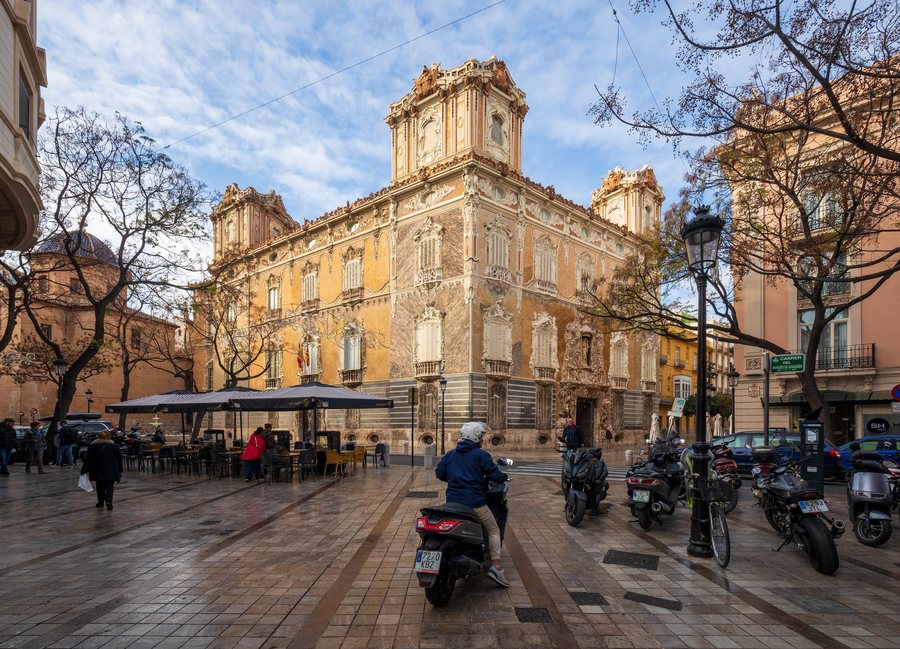 File:Palace of the Marquis of Dos Aguas in Ciutat Vella, Valencia, Spain, 2024 January.jpg
Photo: Ximonic (Simo Räsänen) via Source, CC BY-SA 4.0
File:Palace of the Marquis of Dos Aguas in Ciutat Vella, Valencia, Spain, 2024 January.jpg
Photo: Ximonic (Simo Räsänen) via Source, CC BY-SA 4.0
Mountains, River and Forests
The municipal area of Dos Aguas is entirely mountainous. The Sierra del Ave extends to the north, while numerous forests of pine and other coniferous trees complete the landscape. The Júcar creates another defining geographical connection: over a long stretch, it forms the boundary between Dos Aguas and Catadau, Tous, Millares and Cortes de Pallás. For the most part, the river runs through a narrow, highly winding riverbed. This combination of mountains, forest and river makes Dos Aguas interesting for travellers who value a clearly scenic setting when choosing where to stay.
Dinosaur Tracks and Cave Research
The ichnological site of Dos Aguas comprises around 50 mapped dinosaur tracks. These include a main trackway with approximately 27 tracks. Together with Tambuc (Millares), the ichnological site of Dos Aguas is part of the evidence of dinosaurs' existence around 80 million years ago, before their sudden disappearance at the end of the Cretaceous period. For visitors interested in the history of the Earth and the traces of long-extinct creatures, this specific connection to prehistoric times is one of the town's most distinctive features.
The Cueva de la Cocina likewise connects a natural setting with a history of research. It is considered one of the important sites for studying the sequence of the Late Mesolithic in Mediterranean Iberia. The settlement and use of the cave in Dos Aguas were interpreted on the basis of archaeological layers using chemical methods. The municipal area also contains caves with rock paintings, including Cueva de La Cocina, Cinto la Ventana and La Cueva de las Maravillas. In other caves, visitors can pursue caving, or speleology. The range thus extends from archaeological questions to direct insights into underground landscapes.
Historic Buildings in the Town
The Torre de Vilaragut dates from the 12th century and is the only surviving part of the former castle of Dos Aguas. At the same time, the tower is protected under Spanish legislation on the preservation of historic heritage. The parish church, “Iglesia Parroquial de la Virgen del Rosario,” dates from the 16th century. Both buildings anchor different periods of the town's history and offer you a second cultural perspective on Dos Aguas alongside the prehistoric sites.
Festivals Throughout the Year
The festival calendar spreads traditional celebrations throughout the year. The festival in honour of San Antonio Abad, the patron saint of animals, is celebrated in January with traditional bonfires. The San Juan festival takes place in June, a traditional celebration marking the beginning of summer, during which Rollo is typically eaten. In August, Dos Aguas celebrates its patron-saint festivals in honour of the Virgen del Rosario and San Roque. Those who wish to plan their trip around cultural dates and regional customs will find different thematic points of interest in these three months.
Dishes and Sweet Treats from Dos Aguas
The local cuisine includes Gazpacho manchego, one of the traditional dishes of Dos Aguas. Turrón de almendra y cacahuete is also a typical sweet associated with Dos Aguas. Both names add a taste of regional everyday and festival culture to the area's scenic and historic themes. Dos Aguas can therefore be experienced not only through its mountains, caves and buildings, but also through dishes connected with the town.
Discover More Places
If you would like to add more destinations to your travel plans, you can also explore Puçol, Alginet, Albalat de la Ribera, Godelleta, Los Ruices, Alfafar, Ontinyent and Villargordo Del Cabriel.
For the overarching travel overview: Valencia.

