
Festivals and traditions in the Valencian Community
Festivals and traditions shape the annual calendar across the Valencian Community, reflecting the different ways the provinces of Castellón, Valencia and Alicante celebrate. Among the best-known events are the Fallas in València, La Magdalena in Castelló de la Plana and the Hogueras de San Juan in Alicante. The calendar also includes religious performances, processions, local markets and patron saint festivals in many towns. If you would like to experience a celebration, check the dates, programme, access arrangements and accommodation well in advance for the specific year.
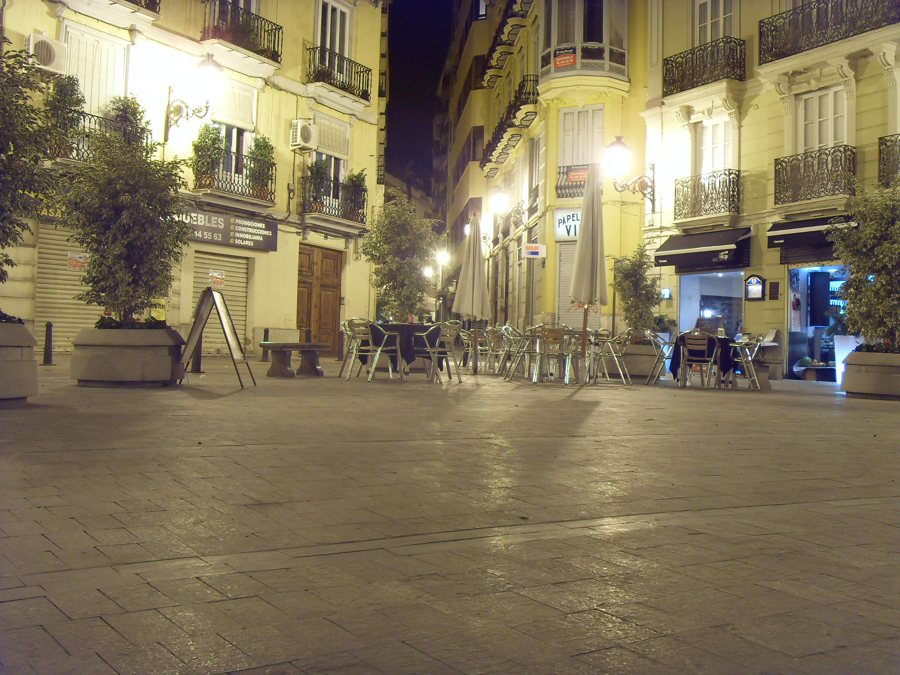 Beleuchteter Platz mit Cafébestuhlung in València bei Nacht; zeigt keine konkrete Festveranstaltung.
Photo: Markus Lenk
Beleuchteter Platz mit Cafébestuhlung in València bei Nacht; zeigt keine konkrete Festveranstaltung.
Photo: Markus Lenk
Fallas in València
The Fallas are known for their large, intricately designed figures, satirical scenes, music, fireworks and the final burning of the figures. Many events take place in March, around the feast of San José. Each neighbourhood organises its own programme; noise, crowds and road closures are part of the main festival days. Before visiting, check the times of the processions and fireworks, road closures, public transport options and quieter places to watch from.
The Fallas are included on UNESCO’s Intangible Cultural Heritage list. The festival is more than an evening event: preparations and clear-up, neighbourhood associations, music groups and traditional dress all play a part. If you are travelling with children or anyone sensitive to noise, plan breaks and a place to retreat to.
For planning a stay in the capital, the local guide to Valencia City and the overview of city breaks complement the festival information.
La Magdalena in Castelló de la Plana
La Magdalena commemorates the history of Castelló de la Plana and combines religious traditions with processions and city festivities. A central feature is the Romeria de les Canyes pilgrimage; the illuminated Gaiates are another distinctive element. The programme changes each year and spans several days. Before your trip, check the official times, starting points, road closures and access arrangements.
Accommodation and restaurants can be busier during the festival. Booking early is a good idea if you plan to attend the main events. Visitors looking to avoid crowds may prefer to go at quieter times or choose events outside the largest processions.
For practical information on the location and visiting the city, see the page on Castelló de la Plana.
Hogueras de San Juan in Alicante
In Alicante, the Hogueras de San Juan are celebrated in June with large artworks, music, processions and pyrotechnic events. The highlight is the Cremà, when the figures are burned. The celebrations draw large crowds and lead to changes in traffic routes. Check the latest event locations and safety rules before choosing accommodation or planning your journey.
Fire and fireworks are part of the festival; follow barriers and instructions from emergency services. If you are sensitive to noise or smoke, take the distance from the main events into account when choosing where to stay.
For a stay during the Hogueras, information on Alicante City and the province of Alicante can help you plan city travel separately from trips to the surrounding area.
More festivals in the region
The region has far more than three major city festivals. La Tomatina is traditionally held in Buñol in August; access may be regulated and require a ticket. In Segorbe, the Entrada de Toros y Caballos and its safety zones are among the best-known events. Alcoy is famous for its Moros y Cristianos, while Elche hosts the Misteri d’Elx. The festivals of Algemesí and numerous patron saint celebrations in smaller towns also help shape the calendar.
These celebrations have different religious, historical or neighbourhood roots. Don’t treat them as interchangeable shows: learn about their significance and the rules of conduct, especially during processions, religious ceremonies or events involving animals. Ask before photographing participants, and keep stages, procession routes and safety zones clear.
If you would like to combine a festival visit with a particular destination, use the pages on Buñol, Segorbe, Sagunt and Morella to plan your visit. Check the latest programmes, access rules and transport information with the organisers or the local council.
Plan your trip around the festival calendar
Dates for many festivals depend on movable holidays or are officially confirmed each year. Even when they take place during a set season, individual programme items, access arrangements and venues may change. Check the current calendar published by the city or organisers, and book accommodation and transport as early as possible if you plan to attend the main festival days.
At large festivals, be prepared for noise, crowds, heat and extra walking. Public transport timetables may change, and roads may be closed. Agree on a meeting point in case your group gets separated, and keep important booking details handy. For a quieter experience, choose smaller local festivals or events on the outskirts of the main programme.
Take part considerately
- Follow barriers and instructions from the police and organisers.
- Respect religious ceremonies and ask before photographing people.
- Find out about fireworks, smoke, noise and any possible restrictions.
- Check admission, tickets, age rules and step-free access for the specific programme.
- Use official transport updates and plan your return journey in advance.
A festival visit is especially rewarding when you leave enough time to enjoy the city and meet its people. Add a walk, regional food or a visit to a cultural site to your plans, rather than trying to fit in as many events as possible.
Frequently asked questions about festivals and traditions
When do the Fallas take place?
The main festival days fall in March, around the feast of San José. Specific events and times are set each year; check the official calendar.
When does Castelló de la Plana celebrate La Magdalena?
The festival takes place every year during Lent, but the exact dates vary. The city publishes the programme and dates for each year.
Is La Tomatina open to everyone?
Access to the main event may be regulated and require a ticket. Before travelling, check ticket availability, entry requirements and local rules.
Are there events in all three provinces?
Yes. Major city festivals and local patron saint celebrations take place across Castellón, Valencia and Alicante. Their dates and scale vary considerably.
How can I avoid problems with traffic and crowds?
Use official transport updates, agree on meeting points and a return route, and stay clear of restricted areas. Book early for popular festivals.
Image caption: Illustrative image of an illuminated square in València at night; the photograph does not show a specific festival event.
Festivals and traditions throughout the year: Official festival guide for the Valencian Community.
