
Forna between the Castillo, local history and mountain views
Accommodation in Forna
Forna combines an impressive local history with paths that open up views across the Valencian mountain landscape. At its heart are the Castillo de Forna, the Església de Sant Bernat Abat and the Casa Badia. The cultural picture is complemented by a new town route with six points of interest in the village, as well as two routes offering different landscape perspectives.
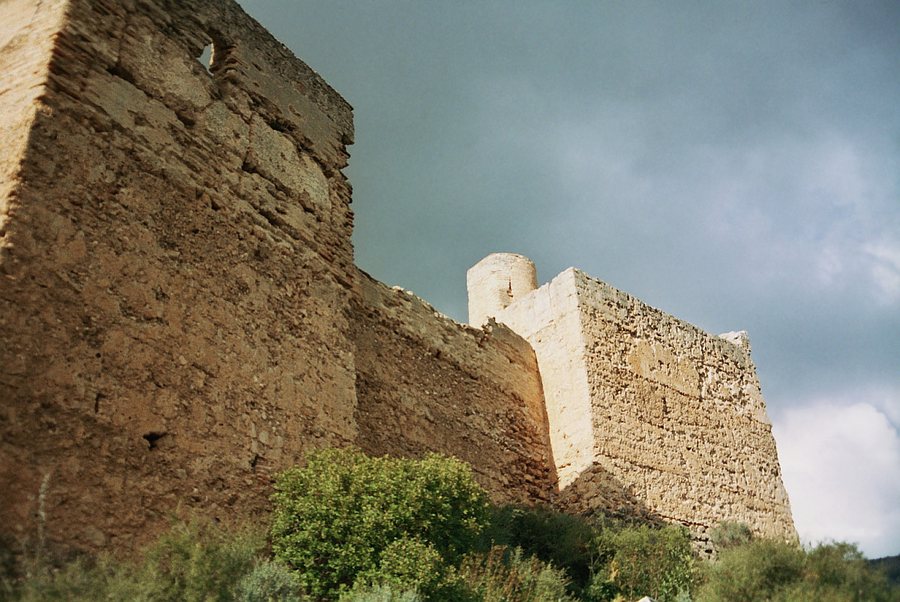 File:Castillo de Forna - Adsubia (Alicante Spain) eastern face.jpg
Photo: Melibokus via Wikimedia Commons, CC BY-SA 3.0
File:Castillo de Forna - Adsubia (Alicante Spain) eastern face.jpg
Photo: Melibokus via Wikimedia Commons, CC BY-SA 3.0
Castillo and church: prominent testimonies to the village’s history
The Castillo de Forna is a stately residence built at the end of the 15th or beginning of the 16th century in the Valencian Gothic style of Civil Gothic. The building contains one of the best collections of graffiti or inscriptions in the surrounding area. The graffiti were probably made by the craftsmen who built the building. Thus, representative architecture and personal traces from the time of construction come together in one place.
The Església de Sant Bernat Abat also leads into Forna’s older history. The church dates approximately from the 16th century and preserves parts of the original decorative paintings and stonework, as well as the bell gable. This creates a cultural focal point for you that brings together not only individual architectural forms but also preserved details.
Casa Badia and the preserved village character
Casa Badia is one of Forna’s most representative buildings and is particularly valued by the residents. During the 1932–1933 school year, it housed Forna’s mixed-gender one-room school. Its significance therefore lies both in its place within the village landscape and in its connection with local school history. Those who want to get to know Forna through its buildings will find here a concrete example of everyday life behind the representative façade.
The new town route is designed for all visitor groups and leads to six points of interest in the village. It passes through Forna’s preserved architectural and cultural heritage and conveys the character of an authentic Moorish alqueria.
Routes with views of the mountains and natural landscape
The Forna–Vilallonga route begins in Forna’s square and offers views of the Marina mountains, the Revoltes d'Orba, La Llacuna and Mount Xillibre. Starting in the square connects the route directly with the village centre. A different perspective is offered by the Forna–El Carritxar–l'Atzúbia route: it opens up panoramic views of the Marjal Pego-Oliva Natural Park and the eastern slopes of the Mostalla and Segària mountain ranges.
There is also a detail within the village that clearly illustrates its spatial structure. Forna’s washhouse lies below the level of the square and can be reached via a staircase. Together with the square as the starting point of the Forna–Vilallonga route, this connection shows how closely village paths, differences in elevation and historic buildings work together in navigating Forna.
Summer festivities in honour of Sant Bernat
Forna’s summer festivities in honour of Sant Bernat include a Moros i Cristians parade and a fancy-dress parade. These events complement the architectural heritage with a festive aspect of the village.
Discover more destinations
More destinations you can discover: Villena, Gata De Gorgos, Trencall, Ibi, Alicante, Pinoso, Altea and La Nucia.
To the main travel overview: Alicante.

_eastern_face.jpg)