
Villena among Castles, Museums, Wine and Nature
Accommodation in Villena
Villena’s Historical Layers
If you would like to combine historic buildings and archaeological traces in Villena, your route leads to the Castillo de la Atalaya and the Iglesia Arcedianal de Santiago. The Castillo de la Atalaya was built by the Almohad Empire at the end of the 12th century as a refuge for Villena’s Muslim population. By prior reservation, it offers guided tours. The Iglesia Arcedianal de Santiago was built between the 14th and 16th centuries and is considered one of the most significant Gothic-Renaissance examples in the Comunitat Valenciana. It has twelve monumental spiral columns and is protected as a Bien de Interés Cultural. The Iglesia de Santa María was built in the 16th century over Villena’s former main mosque and is protected as a Bien de Relevancia Local.
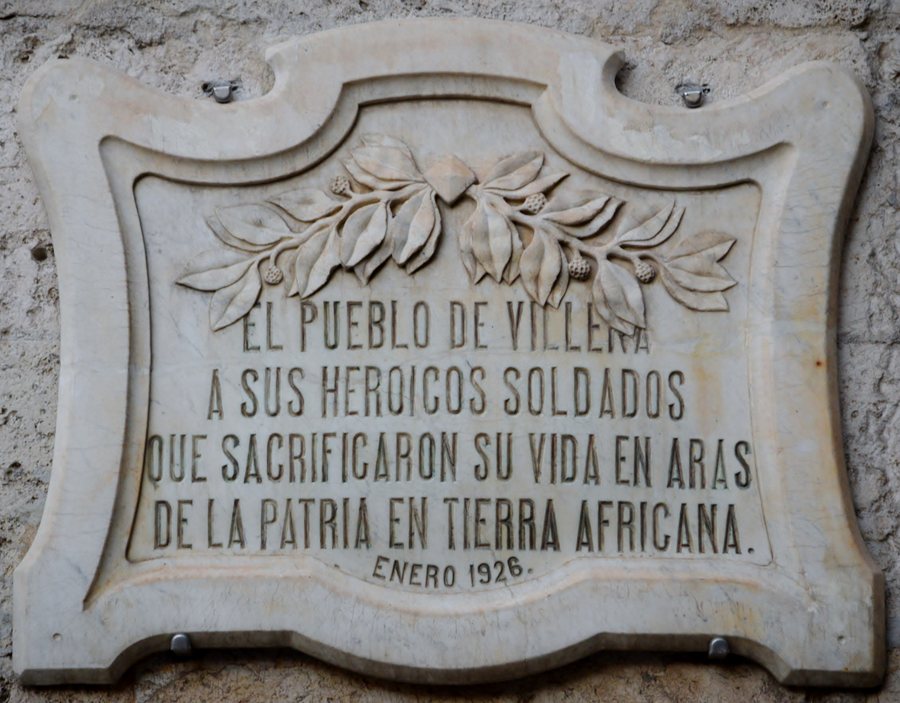 File:Villena. Palacio Municipal. Placa 1926 2.jpg
Photo: Photo: Enrique Íñiguez Rodríguez ( Qoan ) Credit information This work was created by Enrique Íñiguez ( Qoan ). You are free to use it for any purpose as long as you credit me properly (e.g. © Enrique Íñiguez (CC-BY-SA) ; other variants are acceptable, le
File:Villena. Palacio Municipal. Placa 1926 2.jpg
Photo: Photo: Enrique Íñiguez Rodríguez ( Qoan ) Credit information This work was created by Enrique Íñiguez ( Qoan ). You are free to use it for any purpose as long as you credit me properly (e.g. © Enrique Íñiguez (CC-BY-SA) ; other variants are acceptable, le
The Museo de Villena (MUVI) takes you through an exceptionally long history of settlement: using valuable exhibits, it documents human settlement in this comarca from prehistory 50,000 years ago to the present day. Its special collection includes the Treasure of Villena, a find consisting of 66 pieces with almost 10 kilograms of gold, which was hidden 3,000 years ago. Cabezo Redondo is also home to a settlement from the Bronze Age dating back approximately 3,500 years.
Theatre, Festivals and Guided Tours
The Teatro Chapí also combines architectural history with a specific visitor offering. The present-day theatre opened in 1925 and features Neo-Mudéjar elements on its side façades and in the stage-house area. It reopened to the public in April 1999 after renovation; today, it is considered one of the most significant theatres in the Comunitat Valenciana. For individual visitors and groups, the Teatro Chapí offers guided tours on one Sunday per month.
The Museo Festero is housed in a four-storey former bourgeois building from the 19th century with Nolla ceramic floors. It displays costumes, festival images, posters, programmes and souvenirs from past festivals. Guided tours must be reserved at the Villena Tourist Info office located next to the museum. Villena’s visitor service provides tourist information, arranges reservations for local tourist tours and sells tickets for municipal tourist facilities.
The origins of the Fiestas de Moros y Cristianos in Villena date back to the late 15th century, when the Virgen de las Virtudes was declared the city’s patron saint. This creates a clear cultural range for planning your trip: you can explore architecture, theatre history, archaeological finds and festival traditions, each with its own focus.
Routes for Active Days
For a more sporting activity, the Vía Ferrata Castillo Salvatierra is 115 metres long, has an elevation difference of 53 metres and is rated AD, meaning somewhat difficult. The Vía Verde del Chicharra offers a different perspective. It is a disused railway line converted for cyclists and pedestrians, with archaeological railway heritage such as abandoned stations, aqueducts and spectacular bridges, as well as changing landscapes. The route begins at the Santuario de Las Virtudes and ends in Biar; from there, you can continue as far as Alcoy.
Nature Observation and Wine
In Villena, protected areas are incorporated into the European Union’s Natura 2000 network through four protection categories: ZEPA, LIC, flora micro-reserves and fauna reserves. Birdwatching is considered a sustainable and nature-friendly tourist activity in Villena for observing birds. In the area of the former Laguna de Villena, which was drained, various wetland and steppe birds can be observed year-round, including little ringed plovers, black-winged stilts, marsh warblers, red-backed shrikes, short-toed larks, black wheatears and European bee-eaters. The endemic, critically endangered fish known as the Spanish toothcarp, or fartet, has been reintroduced in the flora micro-reserve located next to Cabezo Redondo.
When choosing your hotel in Villena, you can therefore weigh up different travel interests: historic sightseeing, active routes, birdwatching, festival culture or regional products. Villena has the largest number of wineries in the entire province. The Alicante Wine Route offers visits to wineries, tastings of gastronomic products, and the purchase of local products and wines. In this way, the wine landscape complements the historic and nature-related themes with an enjoyable element of your stay.
Other Places in the Region
For further orientation in the region, you can find Sanet Y Negrals, Xinorlet, Orxeta, Sant Vicent Del Raspeig, Banyeres De Mariola, Callosa D'en Sarrià, Guadalest and Ibi.
For the overarching travel overview: Alicante.
