
La Llosa: Beach, Wetlands and Historic Traces
Accommodation in La Llosa
La Llosa between Coast, Nature and History
La Llosa brings together several Valencian facets that can be clearly distinguished when planning a trip: an unspoilt beach, wetlands with waterbirds, historic traces and paths through the coastal landscape. There are also places where former uses of the water remain visible, as well as local festivals and special opportunities around the coastal airfield.
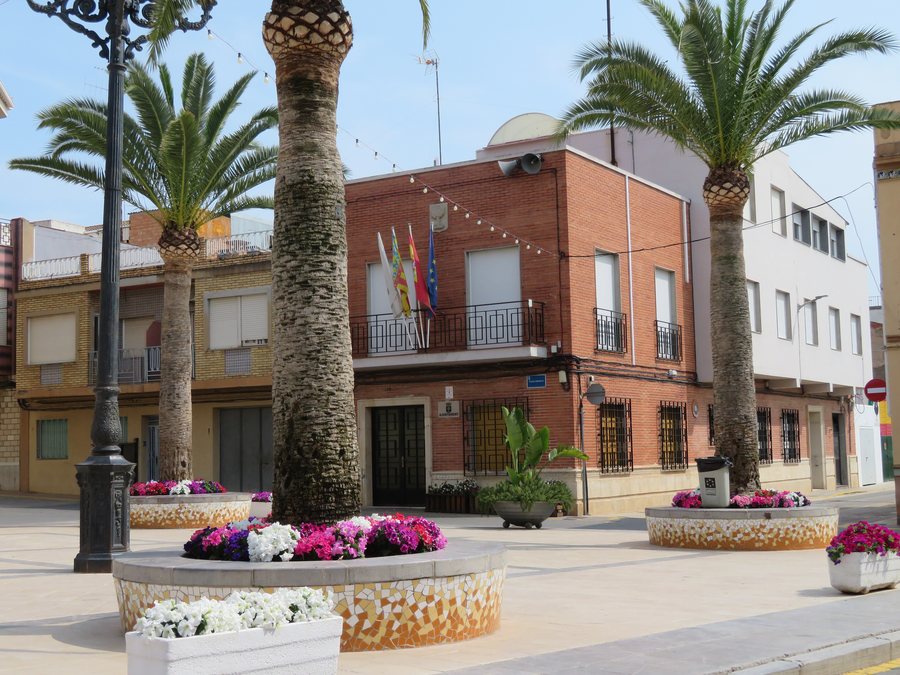 File:Ayuntamiento de La Llosa, municipio de Castellón (España).jpg
Photo: Juan Emilio Prades Bel via Wikimedia Commons, CC BY 4.0
File:Ayuntamiento de La Llosa, municipio de Castellón (España).jpg
Photo: Juan Emilio Prades Bel via Wikimedia Commons, CC BY 4.0
The town developed from an old Arab alquería. A prominent testament to its later history is the parish church of El Salvador. It dates from the 17th century and displays Gothic and Baroque features. These include a ribbed vault and round arches. The parish church can be visited during service times.
Historic Traces at Springs and in the Park
The El Carcau area contains several points of interest with different characteristics. In addition to the Font del Carcau, the remains of an old mill have been preserved. The area was converted into a park, where parts of the former wall are still visible. The Fonteta has been preserved as a monument in El Carcau. Over the course of its history, it was first used as a watering place for livestock and later as a washing area.
The springs also tell of the connection between the landscape and agriculture. Font Redona, also known as Font de La Llosa, is a natural spring and a symbol for the local population. Its water was formerly used to irrigate parts of La Llosa and neighbouring Xilxes. Els Pouets is also a natural spring. It lies in the agricultural area between La Llosa and Xilxes and was recently restored.
Beach and Wetlands
Playa de La Llosa presents the coast in a deliberately open form: the unspoilt beach has no buildings. A wooden promenade runs alongside the area, and an illuminated bridge crosses the La Gola channel. As a result, this stretch of coast focuses not on dense development but on the connection between beach, channel and wetland landscape.
La Marjal is a wetland near the town. Typical wetland vegetation and numerous waterbirds characterise this natural area. The lagoons and wetlands of La Llosa provide refuge for resident, breeding and migratory waterbirds. Those interested in nature observation will therefore find a different focus here than at Playa de La Llosa.
Paths, Festivals and Special Experiences
The Camí de Serratella connects various points along the Castelló Sud coast through the wetlands. It leads to the Marjal de La Llosa and Playa de La Llosa. Numerous seabirds from different families can be observed at the beach. The route thus links the coastal landscape with birdwatching without either area losing its distinct character.
The Font del Carcau area has facilities for children and paella barbecue spots. Another special feature is La Llosa’s coastal airfield: it is home to a flight school, and private flights can be arranged. The festivities in honour of San Vicente Ferrer begin on the Tuesday after Easter and include bull demonstrations.
When choosing accommodation, you can weigh these different focuses against one another. A hotel or other accommodation in La Llosa is especially suitable as a search topic when you do not want to consider the beach, wetlands, historic sites and local traditions separately in your planning. For a nature-focused daily itinerary, La Marjal, the lagoons and the waterbirds take centre stage; cultural interests, on the other hand, lead to the parish church, El Carcau and the springs.
More Destinations for Your Travel Planning
If you would like to extend your travel planning beyond La Llosa, here are some more destinations: Santa Magdalena De Pulpis, Vallat, Vall De Almonacid, Casablanca, Cabanes, Lucena Del Cid, Borriol and Les Coves De Vinromà.
For the higher-level travel overview: Castellon.

.jpg)