
Les Coves De Vinromà: Churches, Mills and River Landscapes
Accommodation in Les Coves De Vinromà
Les Coves De Vinromà combines impressive religious buildings, fortified architecture, river landscapes and paths with different focal points. The five frescoes by Joaquín Oliet in the Ermita del Cristo del Calvario stand alongside the Barranc de la Valltorta, La Morería and the paths to the mills.
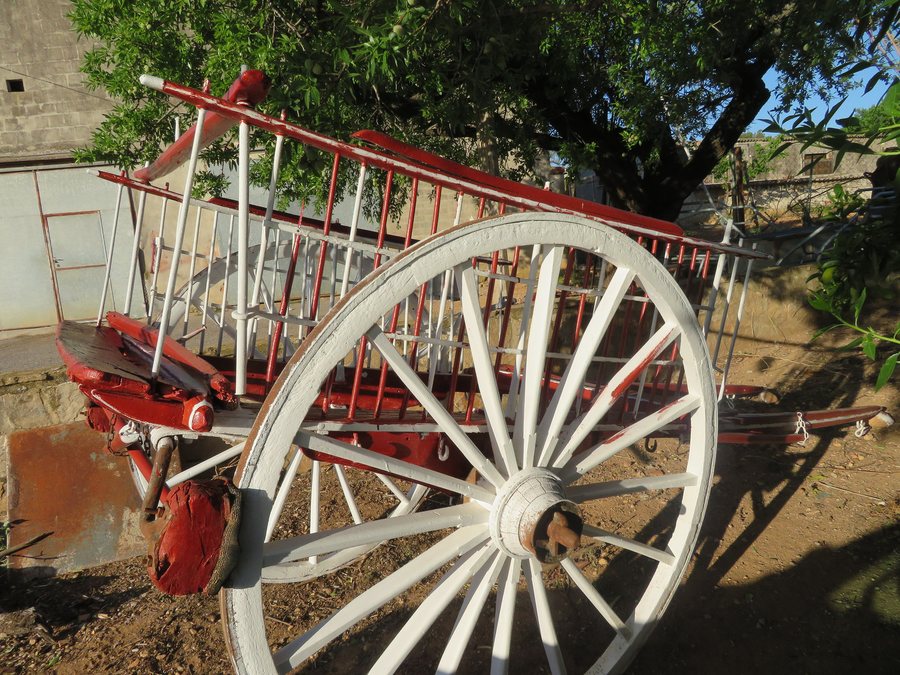 File:Carro antiguo del siglo XX, fue construido en les Coves de Vinroma (España).jpg
Photo: Juan Emilio Prades Bel via Wikimedia Commons, CC BY 4.0
File:Carro antiguo del siglo XX, fue construido en les Coves de Vinroma (España).jpg
Photo: Juan Emilio Prades Bel via Wikimedia Commons, CC BY 4.0
Religious Buildings and Historical Traces
The Ermita del Cristo del Calvario has an octagonal floor plan and contains five frescoes by Joaquín Oliet dating from 1809 to 1810. A cypress-lined path with Stations of the Cross leads to it, with chapel-like structures decorated with tiles from Alcora. The Ermita de Sant Vicent was built at the beginning of the 17th century; the year 1614 is inscribed on the building. It is located next to the Mas dels Arcs path and the old Roman road. Its restoration created a recreational area around the building.
The Casa Fortificada de los Templarios is classified as a Bien de Interés Cultural, also known as La Casa del Temple, and is associated with knights of this military order. The fortified residential building has defensive elements and a distinctly military character.
The Iglesia Parroquial de la Asunción preserves a collection of goldsmiths’ work and liturgical vestments. Its construction began at the end of the 18th century to replace the earlier church, and it combines elements of late Baroque and academic Neoclassicism. The Iglesia Vieja de los Desamparados was originally an Arab mosque. The Portalet is the only surviving entrance to the castle.
River Area, Mills and Special Landscapes
The Barranc de la Valltorta runs through the municipal areas of Tírig, Albocàsser and Les Coves and has been a World Heritage Site since 1998. La Morería is a plant micro-reserve located by the river, where old hydraulic mills have been preserved.
The Ruta dels Molins is approximately 12 kilometres long and has a low level of difficulty. Its approximate length and low level of difficulty provide a manageable framework for planning the day; the lack of signposting should be taken into account when navigating. It is not signposted, runs along the San Miguel River and leads to traditional grain mills. The Ruta dels Garrofers is primarily designed for mountain bikes, but can also be completed on foot; its landscapes are characterised by carob trees. The Ruta dels Ametlers passes through agricultural landscapes with strong colour contrasts. During the flowering period in the second half of January and the first half of February, the fields take on colour from the almond blossoms.
Museu Almirez
The Museu Almirez is located in a three-storey building and displays mortars for industrial, culinary, decorative and other purposes.
Discover More Places
In addition, you can consider Artana, Geldo, Figueroles, Almedíjar, Chóvar, La Llosa, Gaibiel and Albocàsser as further destinations for your regional orientation.
More about the region: Castellon.

.jpg)