
Borriol between river valley, rock art and dry-stone tradition
Accommodation in Borriol
Between River Valley and Mountainous Terrain
Borriol combines a striking river valley with mountainous terrain and a dense succession of cultural traces. The Borriol Valley follows the course of the Borriol River and connects the coastal plain with the inland area. The terrain is predominantly mountainous; areas suitable for agriculture and livestock farming are found mainly in the river valley. If you are planning accommodation in Borriol, you can consider the town’s history, landscape and trails as different focuses of your stay.
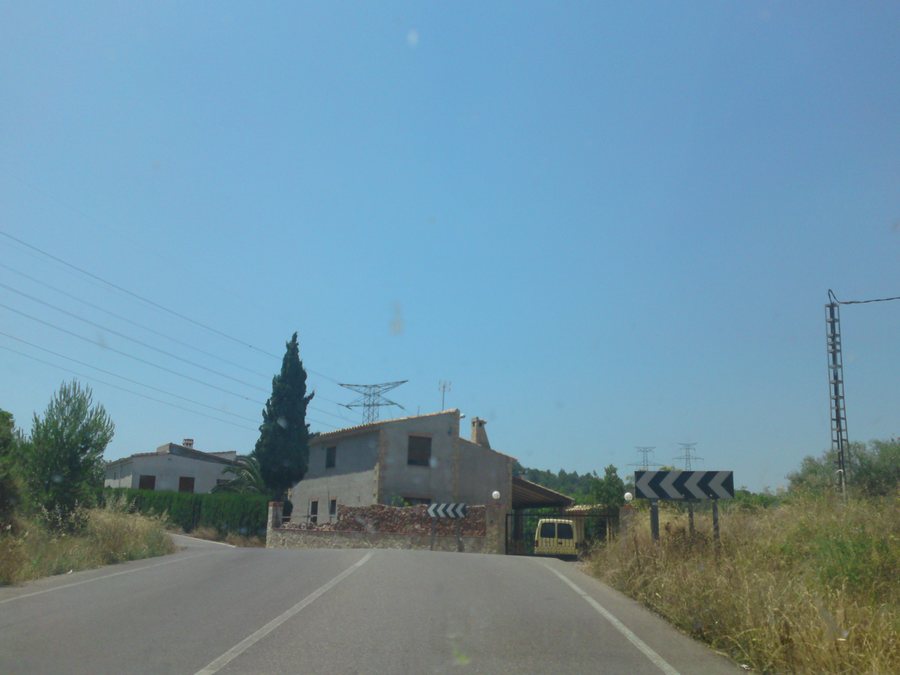 File:Borriol, Castellón, Spain - panoramio (1).jpg
Photo: zejijunto via Wikimedia Commons, CC BY 3.0
File:Borriol, Castellón, Spain - panoramio (1).jpg
Photo: zejijunto via Wikimedia Commons, CC BY 3.0
La Moreria and Historical Traces
The history is particularly tangible in La Moreria. La Moreria was the neighbourhood where the Moriscos of Borriol lived until their expulsion in 1609. Excavations have uncovered paved streets, simple multi-storey houses, an irrigation channel, cisterns, a cement kiln and an underground grain store there. The Church of Sant Bartomeu was built in the 16th century on the site of an earlier 13th-century building. The ceiling of the presbytery features Baroque murals from the late 17th century depicting episodes from the life of the saint. The Ermita de Sant Vicent Ferrer is a 17th-century building located where the Valencian saint preached in the 15th century. From there, panoramic views extend over the centre of Borriol, the Castillo and La Moreria.
Dry Stone and Water Management
The mountainous areas of Borriol contain numerous dry-stone structures, including terraces, stone huts, shelters, cisterns, and lime or cement kilns. The tradition of dry-stone construction is part of Borriol’s culture, history and landscape and continues to be passed down from generation to generation. Borriol’s historic irrigation heritage includes channels, basins and other structures for using the water around the Borriol River.
Rock Art, Museum and Castle Remains
The La Joquera rock paintings were declared a UNESCO World Heritage Site in 1998, together with dozens of sites featuring Levantine rock art. The Museu d’Història de Borriol (MUHBO) is located in the Casa de la Vila, a late-18th-century building in the Neoclassical style. A Gothic pointed arch from the 15th-century Casa del Consejo has been preserved there. The Roman room of the MUHBO contains the Mil·liari de Borriol, a stone milestone with an epigraphic inscription. The second floor displays ethnological objects related to Borriol’s traditional stone-cutting craft. The visible remains of the Castillo de Borriol are of Arab origin; a path leads there from the town of Borriol.
Circular Trail and Cycling Routes
Those wishing to combine trails and nature observation can take the Ruta de la Joquera, a circular route that encompasses numerous cultural and natural features along its entire course. Bilingual panels provide information on the scientific names of the plants and animals; translations into English and French are also available. A cycling route in Borriol is suitable for families and children because its incline is not particularly steep. In addition, a BTT route in the municipality of Borriol is the longest BTT route in the municipality.
Public Connection to Castelló
For mobility planning, the municipality of Borriol has a public bus connection to Castelló operated by Autos Mediterráneo. Borriol’s bus stops are located along Avenida de Zaragoza. The connection and the location of the stops therefore provide concrete reference points for the daily rhythm of your stay.
Discover More Places
For your further travel planning: Culla, Fuentes De Ayódar, Traiguera, Geldo, Sarratella, Torreblanca, Anroig and Cervera Del Maestre.
For the higher-level travel overview: Castellon.

.jpg)