
Viver: Waterways, Cultural Heritage and Nature
Accommodation in Viver
Viver combines historical landmarks, hydraulic heritage and nature-based experiences. Between CIBAL, the Ruta del Agua, the hiking trails and the landscapes of El Sargal, it offers a varied destination for anyone looking to combine culture and outdoor activities.
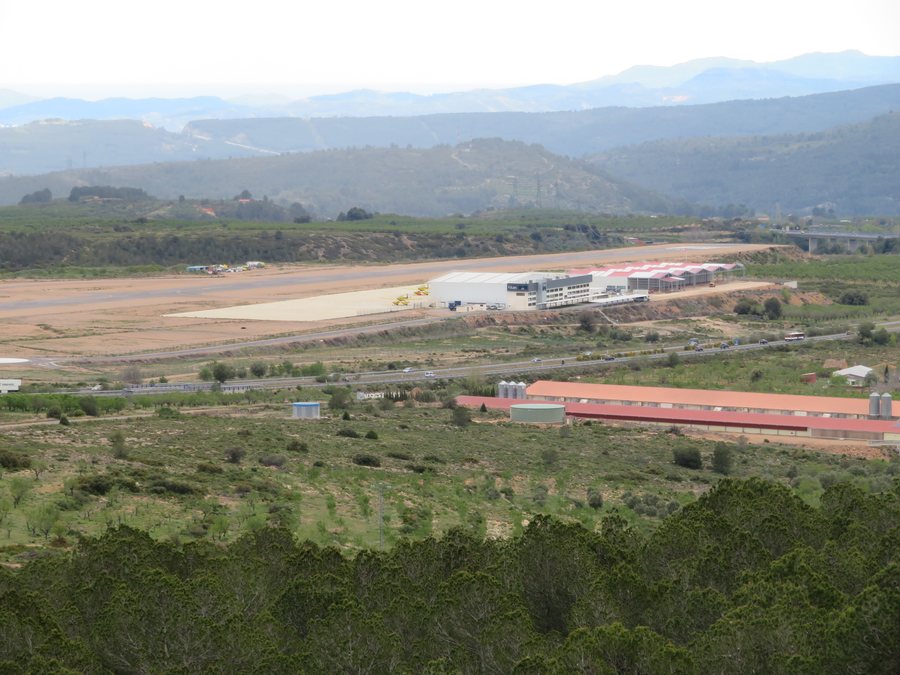 File:Aeródromo de Viver (Castellón, España).jpg
Photo: Juan Emilio Prades Bel via Wikimedia Commons, CC BY 4.0
File:Aeródromo de Viver (Castellón, España).jpg
Photo: Juan Emilio Prades Bel via Wikimedia Commons, CC BY 4.0
Cultural History in the Town Centre
The Centro de Interpretación de la Batalla de Levante, or CIBAL for short, is a permanent exhibition in the Espacio Cultural El Convento. It focuses on the events that took place in Viver during the Spanish Civil War. CIBAL can be visited during normal opening hours or by groups by prior arrangement. The historic building and cloister of the Espacio Cultural El Convento also host exhibitions, concerts, theatre performances, conferences and other cultural events. El Convento is classified as a locally significant cultural heritage site and was built more than four centuries ago together with the Church of San Francisco de Paula. The San Francisco de Paula Hermitage and Convent preserves renovated cloisters and a Baroque convent church dating from 1605.
The Iglesia Parroquial Virgen de Gracia also tells the story of changing eras: it was built in the 14th century as a mosque and subsequently converted into a Christian place of worship. The lower section of its communion chapel houses a museographic collection of goldsmiths’ work, paintings and sculptures. A tour of the historic town centre includes the Portal de los Huertos, which recalls Viver’s medieval appearance, and the Ermita de Santa Bárbara. The Fuente de la Asunción was the town’s first public fountain; it was built in 1608 and remodelled in the Baroque style in 1619.
Hiking, Water and Historic Routes
Viver offers seven circular health routes of approximately 4 to 5 kilometres in length. They take about an hour on foot and have a low or moderate difficulty level. There are 18 hiking routes in total through natural landscapes, suitable for people of all ages. The trails are generally easy or moderately difficult and should usually be followed using a GPS track, as they are not marked on the terrain. The Ruta del Agua is a circular route through the hydraulic heritage of the Manantial de San Miguel. It starts at Viver Town Hall, initially climbs uphill to the spring and then descends to the river into which its water flows. Ruta 1: La Torre y El Sargal runs between orchards and irrigation channels, leads to the remains of former power stations and a Moorish watchtower, and reaches the El Sargal recreation area. The Urban Fountain Route connects fountains at Plaza Mayor, Plaza Constitución, Plaza del Ángel, Avenida de Valencia, Calle Cazadores, Calle Molino, Calle Olivera, Calle de Eras Altas, Camino San Roque and Calle Serrallo.
For walks and cycling tours, the Vía Verde de Ojos Negros passes through the municipality of Viver. It can be used on foot, by bicycle or in a wheelchair, except for a ramp outside the original route alignment. Further historical highlights include the Torre íbera del Ragudo, with an Iberian foundation and Moorish elements in its upper section, and the Torre del Río. The latter is a cylindrical tower made of roughly hewn stones, with Roman foundations and an origin considered to be Islamic. The Torre íbera del Ragudo served during the Moorish period as a watchtower for the fortresses of Xèrica and Segorbe.
Natural Sites and Regional Experiences
La Floresta is a 40,000-square-metre nature park in the Barranco Hurón. Its landscape features fern-covered rock faces and stalactites, hanging houses, lush vegetation, cascades and waterfalls. It has sports facilities such as tennis courts, as well as play areas for children. At El Sargal are the Cuevas del Sargal, a group of caves that served as shelter for the area’s first inhabitants from the Upper Palaeolithic to the Neolithic and feature interesting karst formations. El Sargal also has barbecue areas for cooking paella and tables suitable for spending the day with family or friends.
The Los Ojos del Prao spring is formed by five openings, or “eyes”, and is one of Viver’s most important groundwater springs. The westernmost spring area is easy to access; a prepared viewpoint enables visitors to observe this natural phenomenon safely and comfortably. Oleoturismo ecológico opens the door to the region’s culinary world with a walk through organic olive groves, a visit to an olive oil mill and an olive oil tasting. The Enoturismo Sostenible experience combines a visit to a sustainable vineyard and winery with a tasting of three wines and a lunch featuring products from Alto Palancia. The Cubo Lagar Rocha Palmera is part of Viver’s preserved wine heritage, whose history has run parallel to that of the town since Roman times.
Festivals and Living Traditions
The San Roque celebration includes a traditional procession in the early morning of 16 August from the church square to the chapel of Saint San Roque, which stands on the hill of the same name overlooking Viver. The Fiestas de San Francisco de Paula take place from Thursday to Sunday in the second week of Easter. The programme includes a bonfire, religious services, processions and the distribution of the Arroz del Santo, which has been passed down for 400 years. Viver’s patron saint festivals are celebrated between September and October in honour of San Miguel Arcángel and the Virgen de Gracia; bull runs and cattle displays follow.
Discover More Places
If you would like to explore other destinations besides Viver, you can also find Artana, Benicassim, Santa Magdalena De Pulpis, Puebla De Arenoso, El Grau de Moncofa, Tírig, Rossell and Ballestar here.
For the higher-level travel overview: Castellon.

.jpg)