
Tírig: Rock Art, Dry-Stone Structures and Regional Traditions
Accommodation in Tírig
Rock Art, Dry Stone and Regional Traditions
Tírig brings together culture, landscape and regional traditions. The parish church of Nostra Senyora del Pilar, the dry-stone huts throughout the municipality and the rock art in the Barranc de la Valltorta offer different ways of discovering the area. Museums, a route designated as a hiking trail and traditional festivals complete the picture.
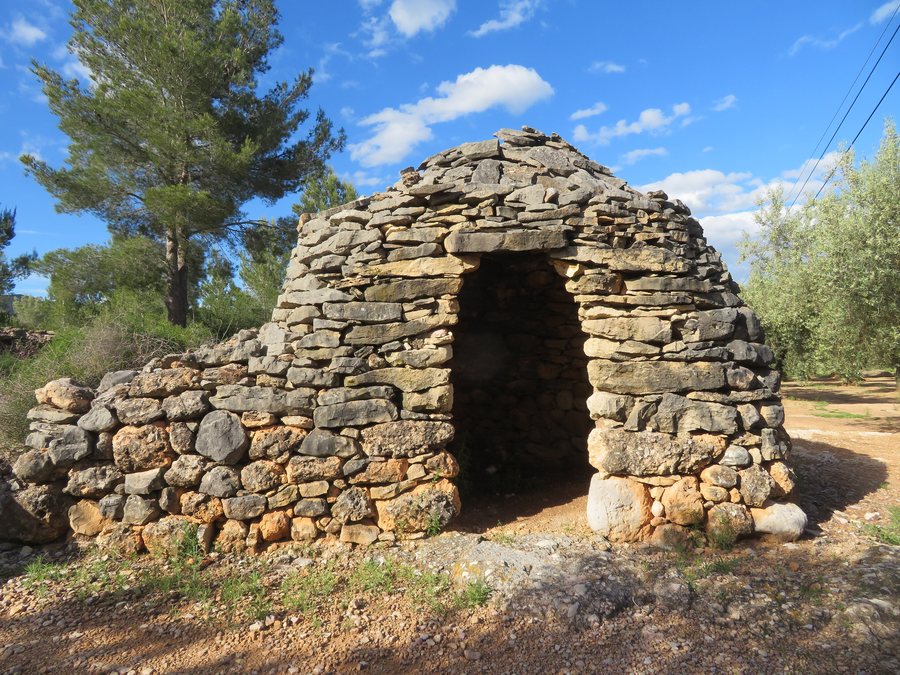 File:Barraca de piedra en seco construida en 1913, paraje de Tirig, comarca Alt Maestrat, provincia Castellón, España.jpg
Photo: Juan Emilio Prades Bel via Source, CC BY-SA 4.0
File:Barraca de piedra en seco construida en 1913, paraje de Tirig, comarca Alt Maestrat, provincia Castellón, España.jpg
Photo: Juan Emilio Prades Bel via Source, CC BY-SA 4.0
Church and Dry-Stone Structures
The parish church of Nostra Senyora del Pilar dates from the late 17th century. Its bell tower features a sundial with the signs of the zodiac. At the church, architectural history and the motif of the zodiac signs are connected. More than 1,440 dry-stone huts have been inventoried and catalogued in the municipality of Tírig; they form part of the local culture of dry-stone construction.
The Valltorta Area and Its Rock Art
The Museu de la Valltorta is located in Pla de l’Om in the municipality of Tírig, 500 metres from the Barranc de la Valltorta. The Barranc contains almost 900 figures in 17 groups of rock shelters. They mainly depict people, animals and hunting scenes from the pre-Neolithic period. The rock paintings in the Barranc de la Valltorta have been declared a UNESCO World Heritage Site. Pla de l’Om and the Barranc de la Valltorta are 500 metres apart; the museum and the rock art remain spatially separate.
The Museu de la Valltorta is the only museum for rock art in the Valencian region. It is the starting point for guided visits to the groups of rock paintings in the Valltorta-Gasulla Cultural Park.
Art and Culinary Specialities
The Museu Puig Roda de Tírig displays numerous works by the painter Gabriel Puig Roda, who was born in Tírig. The regional cuisine also has a specific connection to the area: the “coqueta” is considered a typical pastry from Tírig and is made with oil, aguardiente, sugar and flour.
Festivals with Their Own Traditions
The traditional festivals in honour of Santa Bàrbara include a pilgrimage, a mass in honour of the patron saint and the distribution of “panets”. The Sant Antoni festival includes a communal breakfast, the performance La Diablera, the blessing of the animals and the distribution of “coquetes”. Santa Bàrbara and Sant Antoni differ in their customs: pilgrimage and mass contrast with breakfast and the blessing of the animals.
Hiking, a Cave and a Running Event
Ruta Pedra en Sec 1 is designated as a hiking trail. The Cova dels Cavalls can be visited as part of a visit considered uncomplicated. An annual running event passes through the Valltorta and is regarded as a special sporting and scenic experience.
Getting There and Personal Travel Planning
From Valencia, the route to the Museu de la Valltorta follows the A-7 and CV-10 towards Castellón. It then continues via Cabanes–Sant Mateu to the junction with the CV-131 Tírig–La Valltorta.
More Places for Travel Planning
Ballestar, La Vall D'uixó, Alcudia de Veo, Todolella, Les Alqueries, El Grau de Moncofa, Geldo and Anroig
For the higher-level travel overview: Castellon.

