
Vallés between Cultural Heritage and Water Landscapes
Accommodation in Vallés
Vallés: Water Landscapes and Valencian Heritage
Vallés combines a historically shaped local history with a water landscape that dates back to the Middle Ages. The municipality is irrigated by the Acequia de Ranes; the irrigation channel dates back at least to the 10th century.
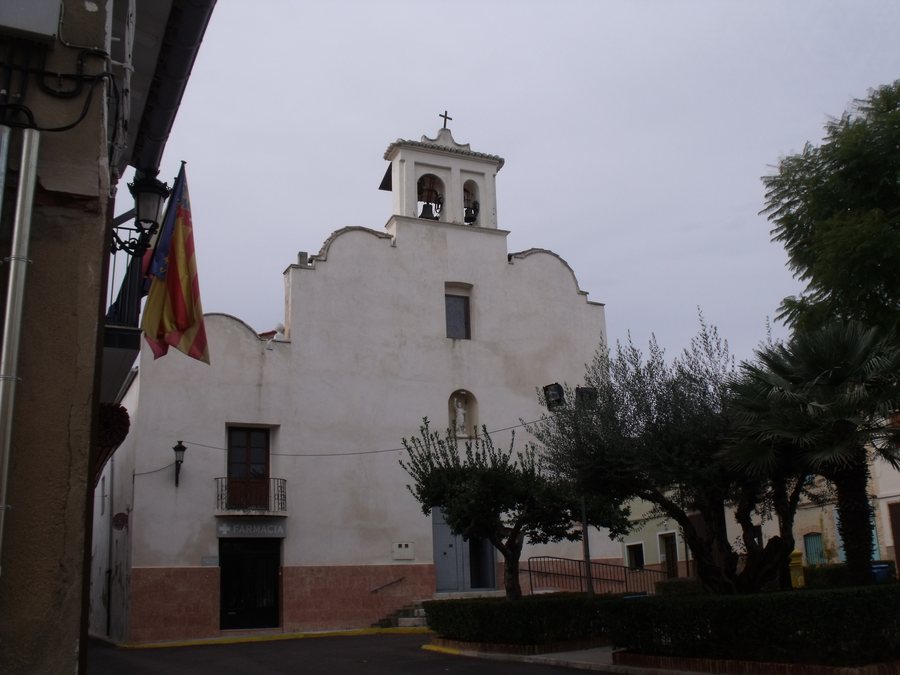 File:Iglesia de San Juan Bautista de Vallés 01.jpg
Photo: 19Tarrestnom65 via Wikimedia Commons, CC BY-SA 4.0
File:Iglesia de San Juan Bautista de Vallés 01.jpg
Photo: 19Tarrestnom65 via Wikimedia Commons, CC BY-SA 4.0
Local History in Striking Buildings
The local history can be traced back to the 14th century: Vallés was known as the alquería of Jaume Vallés. In 1609, Bernat Sanç Vallés resettled the area with Old Christians; at that time, the settlement consisted of 18 houses. Another historical trace is the church of Sant Joan Baptista, which holds the status of a Valencian cultural asset of local significance. This sequence brings together local history, repopulation and cultural heritage in a compact historical narrative.
This architectural history is concentrated in the Sanç family palace. It is a significant example of 15th-century Valencian secular Gothic architecture. In the 17th century, the palace was remodelled in the Renaissance style; a gallery with tiled windows was added at the rear. The façade features characteristic twin windows, typical of the Crown of Aragon. The combination of its Gothic classification, later Renaissance remodelling and distinctive windows makes the palace particularly interesting for visitors with an interest in cultural history.
The palace is located in the immediate vicinity of the Cànyoles River. It offers impressive views of the Vernissa mountain range and the city of Xàtiva. At the same time, it is now privately owned. Its architecture, proximity to the river and the views passed down through history therefore shape the image conveyed by the palace of Vallés.
Water Route and Municipal Perspective
The Ruta del agua de la Costera takes up the area's connection with water. It includes Vallés as one of the locations in the historic Costera de Ranes water landscape and makes it possible to visit the best-preserved landscapes of the region's natural water environment. The route is therefore aimed at travellers who want to consider not only individual buildings, but also the relationship between irrigation, landscape and regional history. Within this theme, Vallés can be understood as a specific location in the Costera de Ranes.
Another distinctly municipal aspect is the Piscina Municipal Vallés. It is publicly owned by the municipality of Vallés and is classified as a freely accessible municipal sports facility.
When choosing accommodation, you can weigh these themes according to your type of travel: cultural history leads to the palace and church, the water landscape to the Acequia de Ranes and the Ruta del agua, while the swimming pool highlights a municipal aspect of the town. Vallés can thus fit into a travel plan that takes specific local history and water-related landscapes into account together.
More Places for Your Regional Planning
For your further regional planning, you can also explore L'alcúdia, Marines, La Pobla Del Duc, Chulilla, Buñol, Quart de Poblet, Ador and L'eliana.
For the higher-level travel overview: Valencia.

