
Whale and dolphin watching in the Valencia region
The coast of the Valencia region is more than just a place to swim: especially in the north of Alicante province, routes lead out to a sea where dolphins and, with a little luck, larger whales can be seen. Dénia is particularly well placed, lying beside Cabo de Sant Antoni and the Mediterranean corridor used by migrating marine mammals. However, a sighting is a wildlife encounter and can never be planned. This guide explains where sightings have been documented, what alternatives are available from land, and what to keep in mind when going on a boat trip.
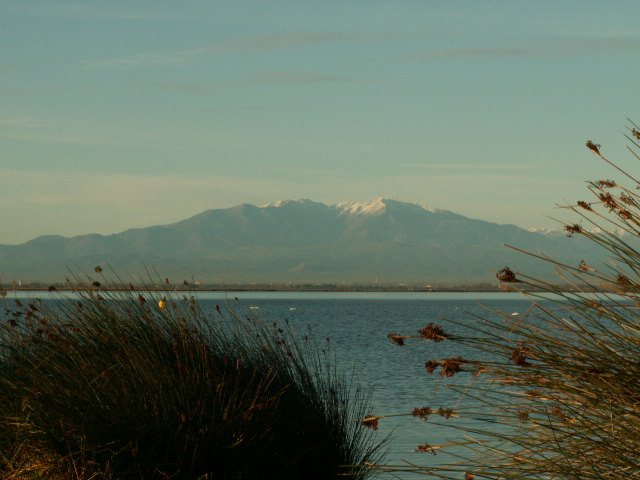 Symbolbild einer Mittelmeer-Küstenlandschaft bei Le Barcarès in Südfrankreich; zeigt nicht Dénia und keine Wale oder Delfine.
Photo: Voyagemedia - RRinnau
Symbolbild einer Mittelmeer-Küstenlandschaft bei Le Barcarès in Südfrankreich; zeigt nicht Dénia und keine Wale oder Delfine.
Photo: Voyagemedia - RRinnau
Where whale and dolphin watching is possible
The most clearly described public opportunities for watching marine mammals are off Dénia. The town’s tourism website identifies the coastal stretch and marine protected areas around Cabo de Sant Antoni as a habitat and migration route for various marine mammals. These include bottlenose dolphins, other dolphin species, pilot whales, sperm whales and fin whales. This does not mean that all these species will be seen on a single trip. The information describes sightings in the area, not a guarantee of seeing them.
According to the tourist office, bottlenose dolphins may be present all year round; fin whales pass by Dénia mainly between May and September. Weather, sea conditions, route and animal behavior all affect whether sightings are possible. Outside the Dénia area, check whether a reputable, currently operating cetacean-watching tour is actually offered from the port you have in mind. A general boat trip is not automatically a whale-watching tour.
As a starting point for planning your coastal trip, you can compare the local information for Dénia with the overview of the Costa Blanca. These pages can help you choose a suitable place to stay, but they do not promise sightings of marine mammals.
Watching from shore: the coast near Dénia
If you would rather stay on land, the coast at Les Rotes and the area around Torre del Gerro make good starting points for a nature outing. The sea and coastline are easy to survey from there; binoculars and patience can help. From shore, animals are naturally smaller and harder to spot than they appear in photographs. This is a relaxed alternative for families or travelers who are prone to seasickness. You can combine it with a coastal walk without making a sighting a fixed part of your plans.
Stay on marked paths and follow local guidance on protected areas, cliffs and access. Do not go around barriers. Animals should not be disturbed by noise, lights or drones, even from shore.
Find more coastal destination guides for Jávea (Xàbia) and Altea. Use them to plan your trip, not as confirmation of a particular viewing spot.
Choosing a boat tour carefully
Dénia’s tourist office lists local companies offering whale- and dolphin-watching tours. Availability, season, departure point, duration, language, price and participation requirements may change. Check these details directly with the operator before booking. Ask whether the trip is specifically intended for watching wild marine mammals or is a regular excursion.
- Ask how the crew keeps its distance from the animals and what they do if animals appear.
- Find out about cancellations or rescheduling due to unsuitable weather and the refund policy.
- Check the duration, sea conditions, and guidance for children and people with reduced mobility.
- Avoid trips that promise to feed, chase, circle or touch the animals.
A responsibly run trip gives the animals space and accepts that nature determines how things unfold. Be wary of any company that promises guaranteed sightings. Even an experienced guide cannot control whether animals will be nearby that day.
Depending on your interests, you can combine an excursion with information about water sports or sailing and yacht charters. Be sure to check whether the operator offers wildlife watching or just a general boat trip.
Watch respectfully and set realistic expectations
Marine mammals are wild animals. They may dive, change direction or stay far away. Keep calm on board, follow the crew’s instructions, and avoid loud calls or sudden movements. If you are operating a boat yourself, learn and follow the rules for protected areas and minimum approach distances. Do not approach a group on your own or chase animals with your boat.
Binoculars are often more useful than a powerful telephoto lens; flash photography and drones are unsuitable. Bring sun protection and water, and seasickness medication if needed. If you have a sensitive stomach, sitting outdoors with a view of the horizon may help; what works varies from person to person.
When is the best time to visit?
Dénia is generally mentioned as a possible place to see fin whales from May to September; according to local information, dolphins may be present throughout the year. These are seasonal indications, not a forecast for any particular day. Check departure times, weather and sea conditions shortly before your trip. In rough seas, a tour may be rescheduled or canceled for safety reasons.
Plan your day so that it will still be enjoyable even if you do not see any animals: Dénia has an old town, coastal paths and sea views. Treat whale and dolphin watching as a possibility, not the sole purpose of your trip.
If you would like to include several stretches of coast in your plans, you can also compare the beach regions of the Valencian Community and the town of Alcossebre. The best season and conditions for a boat trip depend on the weather and the operator.
Frequently asked questions about whales and dolphins
Can I be sure to see dolphins off Dénia?
No. Dolphins are seen in the area, but there is no guarantee for any individual trip or particular viewpoint.
When do fin whales pass Dénia?
The town’s tourism website cites mainly May to September. This does not predict whether an animal will be visible on any particular day.
Are there options without a boat?
Yes. The coast at Les Rotes and the viewpoints near Torre del Gerro offer views of the sea. Sightings from land are not guaranteed either.
How do I find an operator?
Dénia’s official tourist office links to local companies. Check the route, season, safety rules and current terms directly with the operator.
What happens if no animals appear?
That depends on the booking terms. Ask in advance; a wildlife-watching trip cannot promise an encounter.
Is the trip suitable for young children?
That depends on the boat, trip duration and sea conditions. Ask about age limits, safety equipment and the possibility of seasickness.
Image note: Symbolic image of a Mediterranean coastal landscape near Le Barcarès in southern France; it does not show Dénia, whales or dolphins.
Source for local species and seasonal information, and the operator overview: Dénia Tourist Office: Nature and marine mammal watching.
