
Bell-lloc: Discover History, Sources and Trails
Accommodation in Bell-lloc
Bell-lloc between History and Landscape
Bell-lloc is a destination for you if you want to combine historic sites, established landscapes, and excursions. Santa Maria de Bell-lloc is particularly distinctive: the pre-Romanesque church has a single-nave layout and a horseshoe-shaped, fully vaulted apse. This means that the focus is not just on a single building, but on a complex with several historical layers.
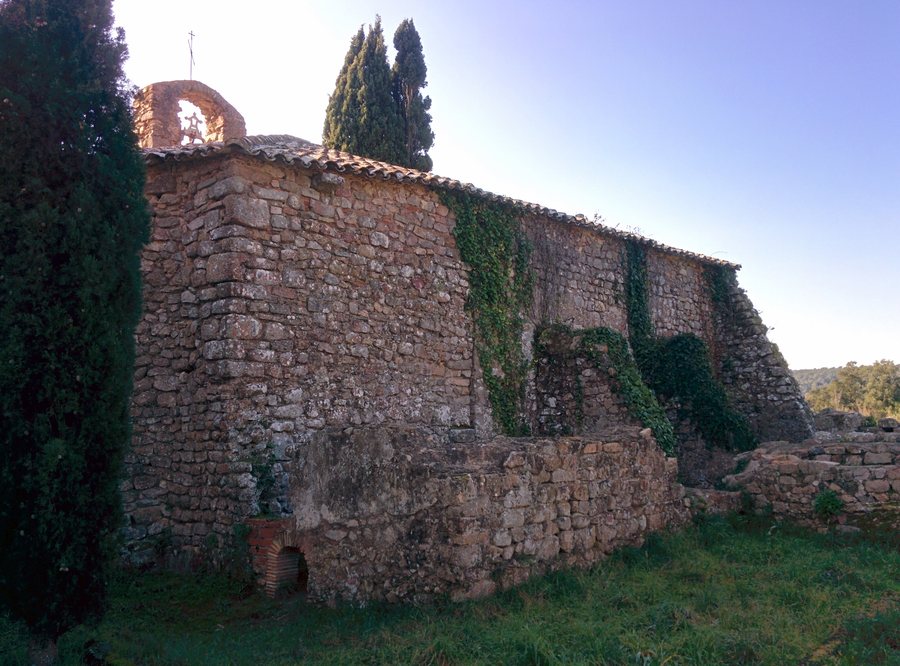 File:Santa Maria de Bell-lloc d'Aro 1.jpg
Photo: Josep Maria Viñolas Esteva via Wikimedia Commons, CC BY-SA 4.0
File:Santa Maria de Bell-lloc d'Aro 1.jpg
Photo: Josep Maria Viñolas Esteva via Wikimedia Commons, CC BY-SA 4.0
The Santa Maria de Bell-lloc complex includes an original building from the 6th century, the present-day church from the 10th century, and a chapel built in the 11th century within the ruins of the former rotunda. Excavations on the northern side also uncovered the remains of a round religious building. For your visit, this creates a cultural focal point that brings together architecture and visible traces from different eras.
Festivals, Personalities and Springs
The Festa Major of the hamlet of Bell-lloc takes place on 15 August and coincides with the Feast of the Assumption of Mary. This date anchors Bell-lloc in a specific festival calendar and may be of interest to you if you would like to combine your visit to the place with a traditional occasion. Mas Reixach de Bell-lloc is also part of the local history: Mossèn Baldiri Reixach, who published “Instruccions per a minyons,” was born there.
Another historical trace is provided by the springs of Bell-lloc, Penedes and Salenys. The iron-rich or medicinal waters of these springs were valued for their healing properties and attracted numerous visitors as well as people from the surrounding area. The water from the Bell-lloc spring was probably marketed commercially around 1906.
Hiking at the Former Transport Hub
The Les Coves de les Gavarres hiking route is relevant for an active day out. It begins at the former Bell-lloc station (Font Picant). The Font Picant stop was a strategic crossroads of the routes between Romanyà de la Selva, Solius and Bell-lloc.
Beaches, Peaks and Museums in the Surrounding Area
The wider area around Bell-Lloch includes several different destinations: Cala Rovira, Platja dels Canyerets and Platja de Belladona are beaches. Puig de Vallvanera is a peak in the nearby area.
Museums also expand the range of excursions. The Museu d'Historia de la Joguina is a museum in the area around Bell-Lloch, as is Salvament Marítim - Sant Feliu de Guixols. The Museu Municipal de Tossa de Mar is also in the area around Bell-Lloch. Further afield in the region is the Museu del Suro. These names represent various cultural points of interest, while Santa Maria de Bell-lloc itself forms the historic focus of the place.
Discover More Places
If you would like to compare Bell-lloc with other destinations, you can then explore Algimia de Almonacid, Espadilla, Fredes, Fanzara, Villarreal, Sarratella, Forcall and Navajas.
For the overarching travel overview: Castellon.

