
Navajas Among Waterfalls, Trails and History
Accommodation in Navajas
Navajas combines striking waterfalls, trails along the Palancia and a local history that remains visible in its architecture and festivals. The Salto de la Novia nature area is particularly significant to any stay: here, distinctive geological features meet the Palancia River and a riverside area lined with riparian woodland. At its highest point, it rises 50 metres above the riverbed.
 File:Navajas. Ayuntamiento 2.jpg
Photo: Enrique Íñiguez Rodríguez ( Qoan ) via Wikimedia Commons, CC BY-SA 3.0
File:Navajas. Ayuntamiento 2.jpg
Photo: Enrique Íñiguez Rodríguez ( Qoan ) via Wikimedia Commons, CC BY-SA 3.0
Waterfalls and Trails along the Palancia
The Cascada del Brazal is a 30-metre-high waterfall on the Palancia River and lies within the Salto de la Novia nature area. The Cueva del Reloj is located there opposite the waterfall. It owes its name to a pointed rock at the entrance: its shadow showed farmers working in the nearby fields what time it was. El Mirador del Paraíso is set up for tourist visits in the area of the Cascada del tío Juan.
The three routes differ in length and course. The Ruta de las Fuentes is an easy, 1.5-kilometre trail along the Palancia River that ends at Salto de la Novia. The Ruta del Palancia is an 11-kilometre circular route between Navajas and Segorbe. The Ruta del Baño follows a roughly 10-kilometre circular route to the main sights around Navajas.
Cycling and Activities by the Water
The Vía Verde de Ojos Negros passes through Navajas, goes through two tunnels and reaches the remains of a former quarry, the railway station and associated facilities. The historic character of this route remains legible in its former railway relics; it is currently used for sports and outdoor walks in a scenic natural setting.
At the Pantano del Regajo, water sports are available, as is kayaking on the Palancia River. Climbing, hiking and mountain biking are also possible there. The range of activities around Navajas therefore extends from riverside trails to more active pursuits on the water and in the surrounding terrain.
Architecture, Views and Local History
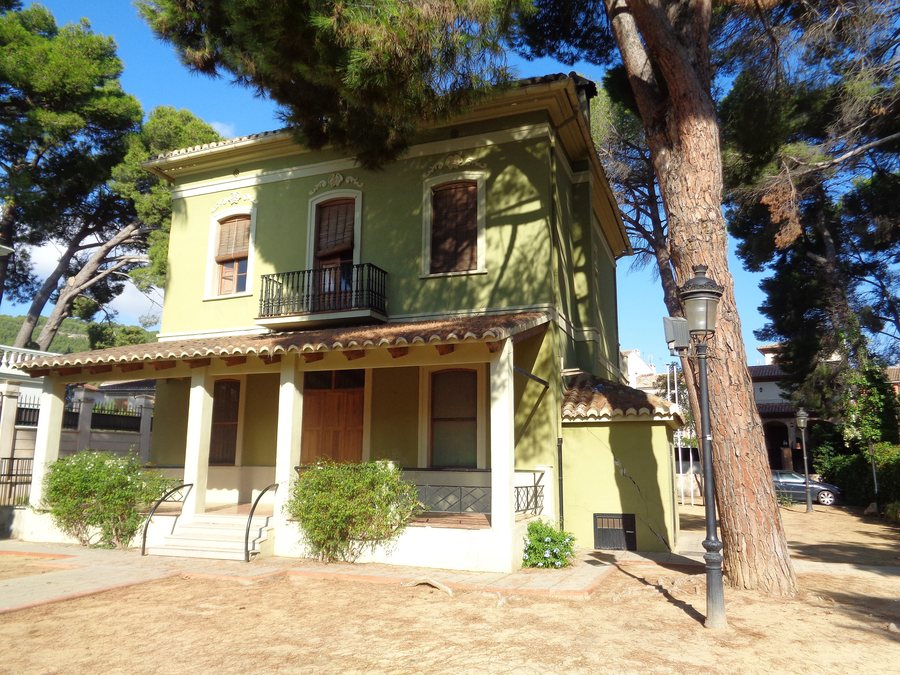
El Olmo, a monumental tree, stands in the centre of the main square. It belongs to the species Ulmus Minor mill and is recognised as a monumental tree of the Valencian Community. El Olmo is considered to be 385 years old. You can also walk along the streets of the urban expansion dating from the late 19th and early 20th centuries and discover grand houses preserved as witnesses to the Belle Époque.
The Torre de Altomira is considered an Asset of Cultural Interest and lies on the foothills of Monte Altomira. An old mining path runs through the upper part of El Altomira. From there, you can see the Sierra de Espadán to the north, the Calderona to the south and the Palancia Valley between them. El Puente del Baño is a single-arch humpback bridge. Its angled profile is adapted to the sloping terrain and the large central arch required. The connection planned around 1799 was intended to link the road to Aragón with the surrounding villages.
Religious buildings are also part of the local landscape. The Ermita de la Esperanza was built in 1491 in honour of Nuestra Señora de la Esperanza. After falling into disrepair again, it was restored in a simple and elegant Byzantine style. The parish church of Navajas dates from the 16th century.
Festivals throughout the Year
The San Antón celebrations begin with the lighting of a bonfire in Plaza del Olmo. The Fiestas Patronales start on the second Saturday in September with the presentation of the festival queen and her court of honour. Various music, theatre and dance performances take place during the festival week. The pilgrimage in honour of San Vicente Ferrer is held on the second Monday after Easter.
The route to Navajas is via exit 33 of the A-23, followed by the CV-213. On site, the Oficina de Turismo de Navajas is located at Plaza del Olmo 1; from April to October, there is also an information point in the Salto de la Novia Interpretation Centre.
Other Places in the Region
Barracas, Cinctorres, Alcalà De Xivert, Vall D'alba, Atzeneta del Maestrat, El Grau de Moncofa, La Pobla De Benifassà, Palanques

