
Discover Burriana between coast, history and nature
Accommodation in Burriana
Burriana combines 11 kilometres of coastline with historic buildings, museums, nature experiences and water sports. The beaches along the coast are characterised by clean, crystal-clear water and fine sand. This opens up different travel options: you can explore the region’s history, spend time by the sea, or include nature and sporting activities in your plans.
Coast and nature at Clot de la Mare de Déu
Playa del Arenal has Blue Flag status. Its highly accessible facilities include boardwalks, adapted toilets and amphibious chairs supervised by qualified staff. Clot de la Mare de Déu is used for contact with nature and sporting activities. The path there received the Sendero Azul award again in 2026. In addition to recognising its landscape and natural value, the award acknowledges the promotion of environmental education and the sustainable use of coastal areas.
Water sports and a special celebration
The Escola de la Mar is located near L'Arenal. There, you can learn canoeing, sailing, rowing or windsurfing. The celebration of Sant Blai and the Font del Vi, held every year on 3 February, offers a completely different experience. During this festival, wine is poured from up to six openings of the Font del Vi into visitors’ glasses.
Historic buildings
El Salvador, Basílica Menor, was commissioned by Jaume I in 1233 from the Order of the Knights Hospitaller as a memorial temple for the first major victory in the conquest of the Kingdom of Valencia. The complex was declared a National Historic-Artistic Monument in 1969 and today bears the title of Minor Basilica. Its floor plan is Romanesque; the building followed early Gothic principles and was supplemented by several Romanesque elements.
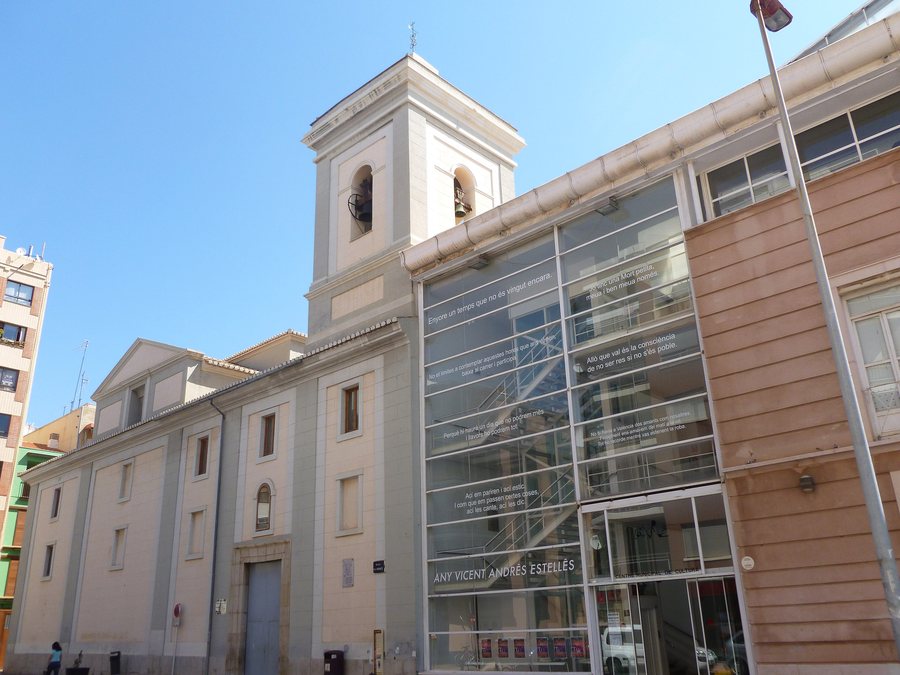
The Torre del Mar was built in 1547 by the Generalitat and financed through the silk tax. It is the only surviving tower from the former network of several watchtowers along the coast of Borriana, which served to protect against pirate attacks from 1552 onwards. The bell tower of Burriana was built in 1363 as part of the fortification system promoted by King Pere IV. It was originally designed as a defensive tower with defence and communication functions, as well as a public clock. The Exconvento de la Merced is designated as a Provincial Historic Monument.
Museums between citrus cultivation and regional history
The Museo de la Naranja comprises six rooms. They trace the historical development of citrus cultivation, trade, transport and advertising for citrus products from the late 18th century to the present day. The Museo Arqueológico Comarcal displays numerous prehistoric and Roman objects, as well as ceramics from Alcora, Ribesalbes, Onda and Manises.
Burriana as a base
Transport connections provide clear guidance when choosing accommodation. On the Valencia–Castellón railway line, trains stop regularly in Burriana throughout the day. By car, the town can be reached via the AP-7, exit 48, and via the N-340. Depending on whether you arrive by train or car and how you prioritise culture, the coast, nature or water sports, you can assess Burriana accordingly as a base for your trip.
Other places in the region
For further comparison, you can also find Cabanes, Montanejos, Cortes De Arenoso, Figueroles, Barracas, Soneja and Ayódar.
For the overview of the wider travel region: Castellon.
More about the destination
Relevant information for planning your trip:

