
Discover Oropesa del Mar: Beaches, Vía Verde and History
Accommodation in Oropesa Del Mar
Oropesa del Mar combines a varied coastline with a former railway line and historical remains spanning from the Stone Age to maritime history. This creates a destination where you can balance beach days, activity and culture through specific places.
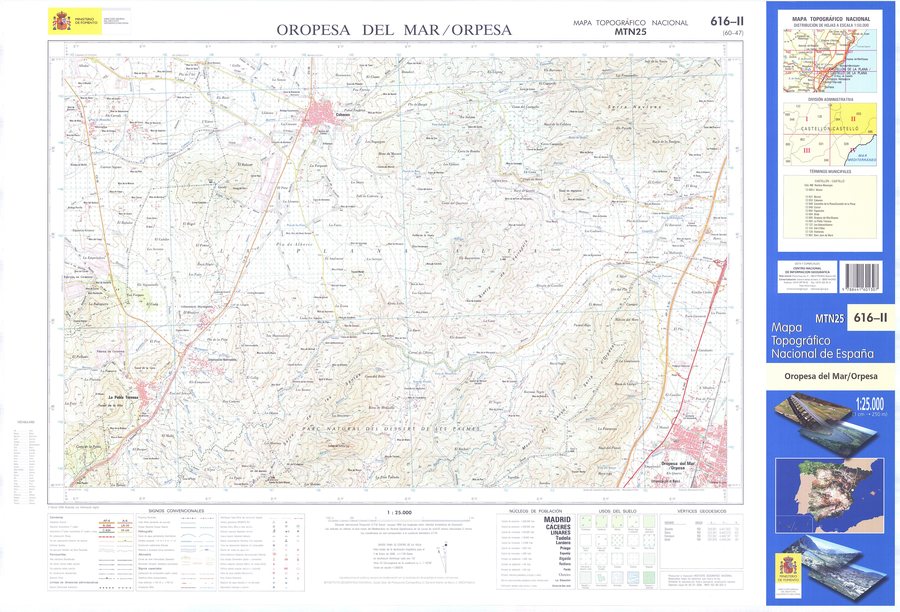 File:MTN25-0616c2-2006-Oropesa del Mar Orpesa.jpg
Photo: Centro Nacional de Información Geográfica via Wikimedia Commons, CC BY 4.0
File:MTN25-0616c2-2006-Oropesa del Mar Orpesa.jpg
Photo: Centro Nacional de Información Geográfica via Wikimedia Commons, CC BY 4.0
Beaches between Bays and Rocks
Oropesa del Mar has seven beaches stretching along twelve kilometres of coastline. Playa de La Concha is located on a bay-shaped coast with calm waters and is suitable for all visitor groups. It is also fully accessible. Playa de La Renegà is set in a natural environment with numerous small sandy coves and irregularly shaped rocky inlets. The coastal landscape therefore ranges from a sheltered bay to varied rock formations.
Exploring the Vía Verde del Mar
The Vía Verde del Mar runs between Oropesa del Mar and Benicàssim along the former railway line. It is almost 5.7 kilometres long; 5.5 kilometres of it lie within the municipality of Oropesa del Mar. The route is suitable for cyclists and pedestrians, as well as people with reduced mobility. Access to the Vía Verde del Mar in Oropesa del Mar is from Playa de La Concha via Calle Tramontana. This allows you to combine a day on the coast with an independent route for activity and observation when planning your trip.
Castles, Chapels and Museums
Castillo de Oropesa del Mar has Islamic-Andalusian origins and is classified as a cultural asset of special interest, a Bien de Interés Cultural (BIC). Capilla Virgen de la Paciencia contains tilework from Alcora dating from the 18th century. At Museo de Oropesa del Mar, you can learn about the history of Oropesa del Mar through models, audiovisual media and archaeological remains.
Museo del Naipe in Orpesa/Oropesa del Mar has more than 16,000 different card games and offers guided visits only. Orpesa La Vella also takes you far back into the past: the first human settlements there date back to the Stone Age. These places give the cultural route different points of access, from archaeological remains and historic buildings to an unusual collection.
Towers and Maritime History
Construction of Torre del Rey began in 1413 on the orders of Fernando de Antequera, King of the Crown of Aragon, to protect the area from possible attacks by Saracens or Barbary pirates. Faro de Oropesa del Mar was inaugurated in 1857 and immediately became an important part of maritime traffic in the region. Torre de La Corda was built as a watchtower to support Torre del Rey in monitoring the coast and to strengthen control over the coastline. Torre Colomera was built in 1553 together with Torre de La Corda as part of Oropesa del Mar’s surveillance system against pirate attacks.
When choosing your accommodation in Oropesa del Mar, you can consciously organise your daily rhythm around your interests: the coast, activity on the Vía Verde del Mar or cultural and historical sites.
Discover More Places
If you would like to explore more places beyond Oropesa del Mar in the regional context, you can continue reading here: Vistabella Del Maestrazgo, Peníscola, Atzeneta del Maestrat, Aín, Bell-lloc, Pina De Montalgrao, Montanejos and Xilxes.
For the higher-level travel overview: Castellon.

