
Castelló De Rugat between Mountain Landscapes and Local History
Accommodation in Castelló De Rugat
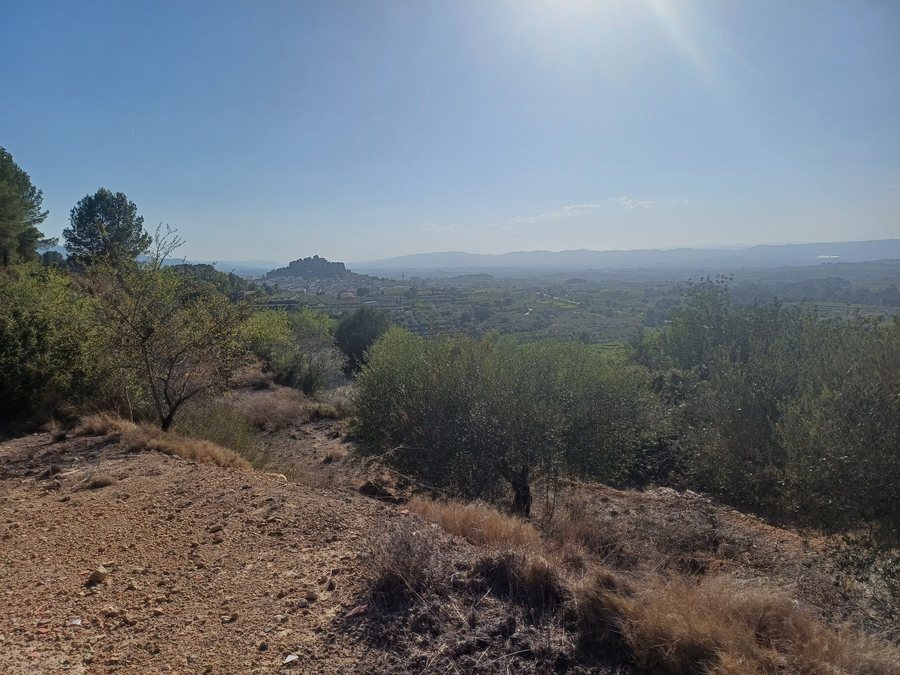
Castelló De Rugat reveals its character in the limestone- and rock-dominated Sierra de Castelló de Rugat, which forms part of the eastern foothills of the Benicadell. The Ruta de los Barrancos traverses a geologically fascinating landscape with wildlife and wild vegetation. This gives you a destination whose impressions lie between rocky scenery, trails and local history.
Landscape, Trails and Time Frames
The signposted Ruta de los Barrancos begins in the centre of Castelló de Rugat. The Ruta de la Sierra begins at the sports centre. The Ruta de la Font Nova takes approximately one hour for the round trip and can be completed entirely by mountain bike. A signposted route from Castelló de Rugat runs for approximately 6 km between fruit trees, olive groves and vegetable gardens and passes underneath the CV-60 road.
The Ruta de la Font de l’Estaca is designed as a half-day tour and takes approximately four hours on foot at a leisurely pace. It passes through terraced land and by centuries-old olive trees before reaching the Font de l’Estaca. The Ruta del Mirador del Águila takes approximately five hours for the round trip.
Buildings, Crafts and History
The Mirador del Águila is located at 781 m above sea level and is considered an area where golden eagles fly over the mountain slopes and can be observed. The Llavador is a 19th-century washhouse in a restored 16th-century building. La Mesquita retains its central rectangular prayer room with two naves and six tiled vaults, as well as details of the glazed decoration on the walls and pillars.
The palace was built by the Bellvís family in the 14th century and improved by the Borja family in the 16th century, who used it as their regular residence. The Museu de la Gerra Evarist Navarro displays handmade jugs of various sizes, along with other earthenware objects formerly used for everyday purposes in the former Palau dels Borja. The town’s oldest pottery kiln is an example of industrial archaeology and dates from the 18th century.
The Porrat de Sant Antoni includes a pilgrimage procession, the blessing of the animals and the distribution of blessed bread. The Porrat de Sant Antoni is also known as Sant Antoni Abad and Sant Antoni del porquet and takes place every year at the Ermita on the first Sunday after 15 January. The Ruta de la Font Nova passes the Nevera dels Racons, which is associated with an important ice-related economic activity that continued until the beginning of the 20th century. A cultural ceramics workshop takes place at the Museu de la Gerra from October onwards.
More Places to Choose From
More destinations to choose from: Chiva, Gestalgar, Bufali, Albaida, Calles, Derramador, Ontinyent, L'alcúdia.
To the higher-level travel overview: Valencia.

