
Cortes de Arenoso: Trails, History and Mountain Nature
Accommodation in Cortes De Arenoso
A Valencian town surrounded by trails and history
Cortes de Arenoso appeals to travelers who want to combine experiences in nature with historical traces. The town has numerous routes and paths for hiking, running and cycling. At the same time, its history stretches back to the Iberian, Roman and Arab periods. The town’s former affiliation with the Baronía de Arenós is also part of its historical heritage. A large archaeological area shows continuous settlement over two millennia; excavations focused mainly on the settlement of Los Morrones.
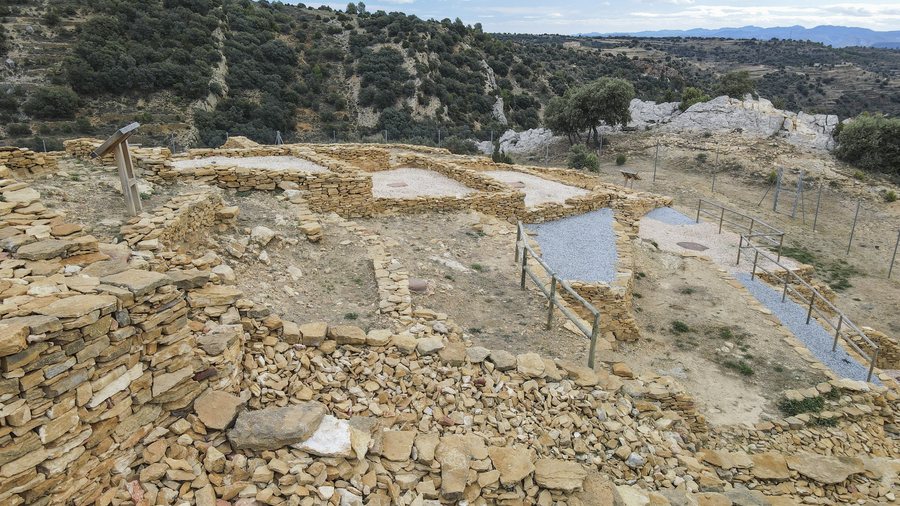 File:VISTA AÉREA YACIMIENTO ARQUEOLÓGICO LOS MORRONES DE CORTES DE ARENOSO 2.jpg
Photo: Ayuntamiento de Cortes de Arenoso via Source, CC BY-SA 4.0
File:VISTA AÉREA YACIMIENTO ARQUEOLÓGICO LOS MORRONES DE CORTES DE ARENOSO 2.jpg
Photo: Ayuntamiento de Cortes de Arenoso via Source, CC BY-SA 4.0
For those interested in hiking, the GR 7 E32 is a notable reference point: it begins in San Vicente de Piedrahita, which belongs to Cortes de Arenoso. The waypoints along this route include San Vicente de Piedrahita, El Cerrito, La Artejuela and Montanejos. San Vicente de Piedrahita was founded by the Arabs. The town’s name is also associated with the fact that Saint Vincent Ferrer preached in this area.
Historical traces in the townscape
The Calle Herrerías gateway is the main entrance to the former medieval settlement of Cortes de Arenoso, which was surrounded by a defensive wall. Rincón del Portal also points to the town’s former fortifications: it is a former entrance to the town with a covered wooden gateway. The “Caseríos del cerrito” complex is designated as a historic center and as a building complex of special interest. It was built predominantly from dry-stone masonry, giving it a distinctive architectural character.
Specific cultural landmarks include the Our Lady of the Angels Church, which was completed in 1585. The Museo Etnológico del Pan is housed in a restored former communal Moorish oven. Agricultural tools used for growing wheat, as well as equipment for making bread, are exhibited there.
Mountains, forests and trails
Cabezo de las Cruces reaches an elevation of 1,710 meters and is considered the second-highest mountain in the province of Castellón. Cortes de Arenoso also has one of the most significant formations of pine trees and Pyrenean oaks in the Comunitat Valenciana. A particularly notable natural landmark is El Rebollo or El Abuelo: the tree is considered Spain’s oldest Quercus faginea and is more than 700 years old.
With its numerous routes and paths, the landscape is well suited to hiking, running and cycling tours. The Área recreativa de la Canaleta recreation area has barbecue facilities, a covered area, tables, chairs and waste bins.
Festivals and how to get there
The patron saint festivals of Cortes de Arenoso are celebrated in August in both population centers. Those wishing to tie their stay to these cultural dates will find them to be another recurring feature of the town. When traveling from Castellón, the route follows the CV-190 toward Alcora, La Foya, Figueroles, Lucena del Cid and Villahermosa del Río, and then continues via San Vicente de Piedrahita to Cortes de Arenoso. From Valencia, the route follows the A-23, exit 73, and then the A-1515 toward Rubielos de Mora and Fuentes de Rubielos to Cortes de Arenoso.
A hotel in Cortes de Arenoso can therefore be considered above all in connection with your own interests in trails, mountain nature, local history and regional festivals. The different themes range from the GR 7 E32 and the historic townscape to the archaeological area of Los Morrones, offering several specific perspectives on your stay.
Discover more places
For your regional selection, you can also take a look at Montán, Culla, Sant Mateu, Les Coves De Vinromà, Burriana, Morella, Xert and La Pobla Tornesa.
For the broader travel overview: Castellon.

