
Discover Catí: Medieval Townscape and Historic Trails
Accommodation in Catí
Catí combines a protected historic ensemble with a medieval town layout, Valencian architecture and trails through the surrounding countryside. The historic ensemble was protected as an Asset of Cultural Interest by Decree 231/2004. The Lonja-Casa de la Vila was built between 1417 and 1437, is now a cultural space in Catí and is considered a well-preserved example of Valencian civil Gothic architecture.
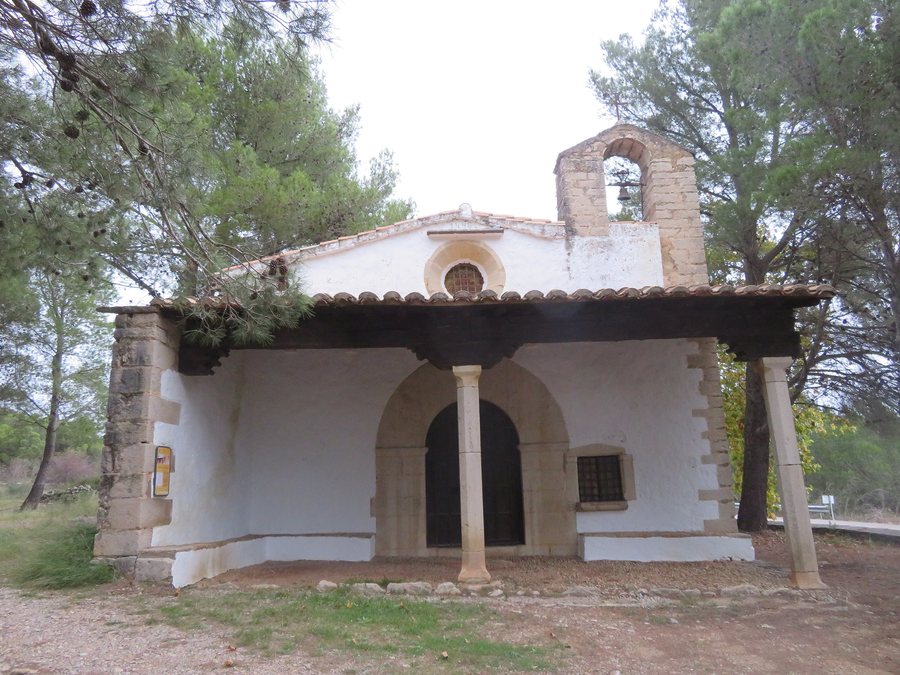 File:Ermita de Santa Anna, municipio de Catí (Castellón).jpg
Photo: Juan Emilio Prades Bel via Wikimedia Commons, CC BY-SA 4.0
File:Ermita de Santa Anna, municipio de Catí (Castellón).jpg
Photo: Juan Emilio Prades Bel via Wikimedia Commons, CC BY-SA 4.0
Historic Buildings and Religious Art
In the historic centre, Casa Miralles is one of the stone manor houses with Gothic windows. Casa del Delme was built in the first half of the 14th century. The Gothic building features windows with pointed, lobed arches and slender tracery mullions. In the parish church of the Assumption of Mary, Catí preserves an altarpiece dedicated to Saints Lawrence and Peter of Verona, which is said to have belonged to King Alfonso V.
Further cultural landmarks include the sanctuaries and hermitages. The interior of the Ermita de la Mare de Déu de l’Avellà contains 18th-century frescoes by Pasqual Mespletera. The sanctuary, or spa, of the Mare de Déu de l’Avellà comprises the hermitage, the hermit’s house and the Font de l’Avellà spring. The Cruz de Avinyó is also known as the Prigó de Avinyó and is considered the oldest surviving cross of its kind in the Comunitat Valenciana. The ruins of the Ermita de Sant Josep are considered a destination for peaceful outings.
Historic Trails around Catí
The Romería de Catí to Sant Pere de Castellfort is a two-day pilgrimage along historic trails, covering 54 km, and takes place on the first Saturday in May. The linear PR-CV 409 hiking trail leads from the public washhouses at Raval del Hospital in Catí to the Ermita del Pilar. Along the way, it passes through truffle oak plantations and by the Rambla de la Morellana, Mas d’en Gatella and Mas de Roblasco.
The PR-CV 410 hiking trail is designed as a circular route starting and ending in Catí. It is 18.20 km long and includes 750 metres of ascent and descent respectively. The route leads to the Balneari de l’Avellà and climbs to Tossal de la Nevera. On the return journey, old ice houses, ravines and springs lie along the trail.
Sanctuaries, Views and Old Ice Houses
The Ermita de la Mare de Déu de l’Avellà lies around 5 km from Catí at an altitude of 960 metres above sea level. The Balneario de Nuestra Señora de L’Avellà was recognised as being of public benefit in 1928 because of its mineral healing waters. The Ermita de Sant Vicent was built between 1610 and 1618; the first mass was celebrated there in 1620. From there, panoramic views extend from the town of Xert to the Ermita de Santa Bárbara in Tírig.
The former use of the landscape can also be seen in its structures: the Nevera del Tossal was built by Joan Bueso in 1636 as a commercial ice house. The Nevera del Mas de la Serra is a circular ice house with a diameter of 8.7 metres and walls one metre thick.
Cheese from Catí
Quesos de Catí is part of the local culinary tradition. The producer makes artisan cheese from sheep’s and goat’s milk sourced from its own farms. Its range includes traditional fresh cheese and various gourmet varieties.
Further Places for Orientation
For further orientation within this selection: Soneja, La Vall D'uixó, Montán, Villarreal, Ares Del Maestre, Espadilla, Torreblanca, Vallat.
For the wider travel overview: Castellon.

.jpg)