
Yátova: Nature Trails, Dry-Stone Structures and History
Accommodation in Yátova
Yátova Between Nature and Local History
Yátova combines clearly recognisable traces of earlier ways of life with paths through a varied landscape. The PRV-115 trail begins in the centre of Yátova. The Ruta del Agua del río Juanes, also known as Río Chico, begins upstream in the municipality. This brings historic sites, hiking trails and nature experiences together in a destination that offers interesting points of connection for both culture-minded visitors and active days in Valencia’s hinterland.
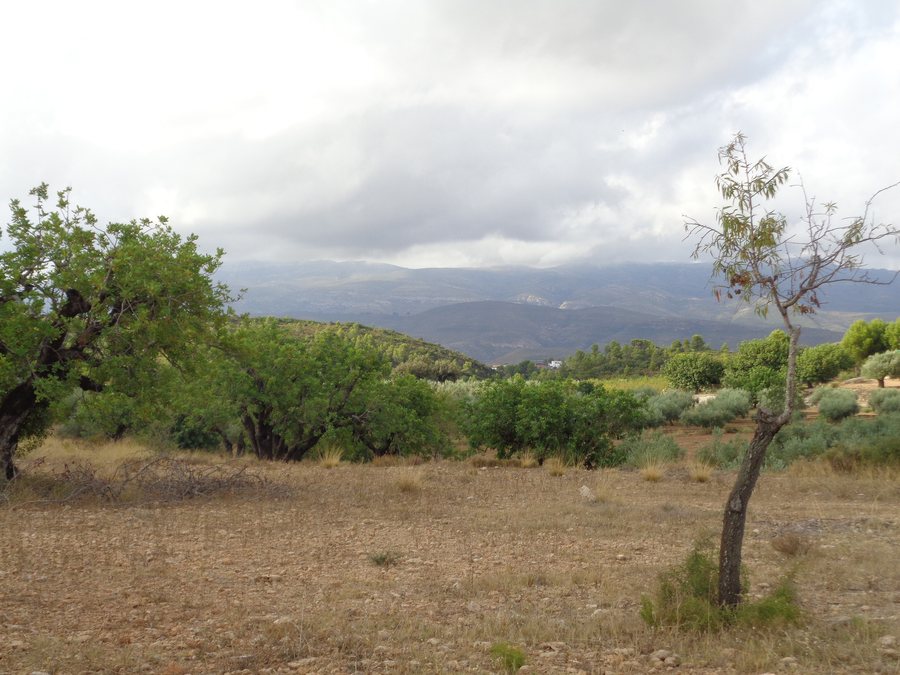 File:Yátova. Campos en dirección a Macastre.jpg
Photo: Enrique Íñiguez Rodríguez ( Qoan ) via Wikimedia Commons, CC BY-SA 3.0
File:Yátova. Campos en dirección a Macastre.jpg
Photo: Enrique Íñiguez Rodríguez ( Qoan ) via Wikimedia Commons, CC BY-SA 3.0
Trails Through Water and Mountain Landscapes
The Paraje Natural Municipal de Tabarla has been a municipal natural area since 2007 and covers 68.42 hectares. Tabarla is known for mountain goats, Iberian hares, foxes, wild boar, genets and red squirrels, as well as numerous amphibians, reptiles and birds. The area includes a recreation area and a section with paelleros for picnics in natural surroundings. Free camping is not permitted in the Paraje Natural Municipal de Tabarla. The trail there is easy to walk and 9.1 kilometres long.
A different landscape can be found at the Cueva de las Palomas. There, rugged formations, pools and cascades shape the terrain; the pools and cascades form during periods of heavy rainfall. The main attraction of the Cueva de las Palomas is a waterfall around 20 metres high. Part of the trail runs parallel to the Juanes River and passes geomorphological formations created by water erosion. Another route leads from the municipality of Yátova to Motrotón, one of the most prominent mountains in the surrounding area.
The PRV-115 is a moderately difficult route that requires no special equipment or training. It passes through dry-farmed land, by carob, olive and almond trees, as well as through scrubland and pine forests. Dry-stone walls are also part of the landscape along the trail; they support the trail surface on the mountainside. This allows you to compare trails of different lengths and character when planning your day, without having to consider nature and traces of agriculture separately.
Archaeology and Distinctive Local Details
Pico de los Ajos is a fortified Iberian settlement in the Sierra Martés and was declared a Bien de Interés Cultural in 2016. The archaeological site has been partially consolidated, signposted and open to visitors since 2020. Guided tours have also been organised there since 2020, with prior reservation. Pico de los Ajos can be reached from a car park at the Refugio de montaña del Manquillo via an easy-to-walk path that follows the GR-7.
Yátova’s townscape also contains several historic points of interest. The Iglesia Parroquial de los Santos Reyes is classified as a Bien de Relevancia Local. It is a Baroque building from the 17th century that was remodelled in the 18th century. Its bell tower was built in Yátova’s former mosque. Calle del Arco is considered the only surviving medieval architectural landmark in Yátova; all urban routes pass by it.
El Pozo de la Nieve dates from the 17th century. The ice house was used to preserve food and is one of the few buildings of its kind preserved in a town centre. The historic dry-stone structures of Los Cucos were used by shepherds, charcoal burners and farmers for shelter. The Ruta de los Cucos is an accessible circular trail that connects several of these structures, which are associated with former activities in the mountains of Yátova.
Visits, Regional Cuisine and Travel Planning
For an insight into other local topics, the Colección Museográfica offers visits during library opening hours or after prior contact with the Ayuntamiento de Yátova. Yátova’s Feria de Turismo, Artesanía y Gastronomía, held on the first weekend of June, provides a seasonal focus on crafts, gastronomy and regional exchange. Associations and traders from Yátova come together there in Parque de San Vicente.
Other places for regional orientation include Bufali, Ontinyent, Segart, Titaguas, Benicolet, Gátova, Navalón and Loriguilla.
For the broader travel overview: Valencia.

